
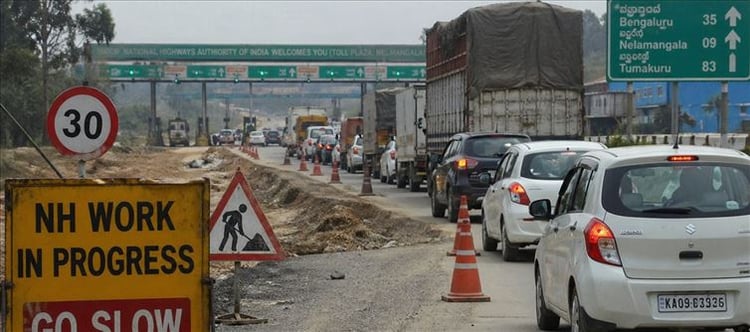


More than ten years on, and the so-called lifeline between Bengaluru and Hassan still feels like a test of patience rather than progress. What should have been a smooth arterial highway has turned into a patchwork of diversions, bottlenecks, and never-ending construction zones. And yet, the one thing that works flawlessly? Toll booths. You pay—every single time—whether the road delivers or not.
The Ground Reality, Broken Down
A Decade of Delays, No Clear Finish Line
The Bengaluru–Hassan stretch has been “under construction” for so long that it’s become normal. Deadlines come and go, but the road remains incomplete—an infrastructure limbo that commuters are forced to accept.
Choke Points That Drain Time and Sanity
Narrow lanes, sudden diversions, and poorly managed construction zones create daily traffic nightmares. What should be a predictable journey turns into hours of uncertainty.
Hassan–Mangaluru: Still a Distant Dream
If Bengaluru–Hassan feels endless, the Hassan–Mangaluru stretch is worse. Progress crawls, timelines stretch, and completion still seems years away.
Tolls: Fully Functional, Ironically Efficient
Despite incomplete roads, toll collection is seamless. No delays, no excuses—just a system that ensures users pay for infrastructure they don’t fully get.
The Accountability Gap
Leaders like narendra modi and nitin gadkari often highlight infrastructure growth, but on the ground, the experience tells a different story—one of lag, frustration, and unmet promises.
Closing Punch:
This isn’t just about bad roads—it’s about a broken contract between citizens and the system. people aren’t asking for perfection. They’re asking for fairness: if you charge for the road, at least finish building it. Until then, every toll paid feels less like a fee—and more like a penalty for patience.
 click and follow Indiaherald WhatsApp channel