


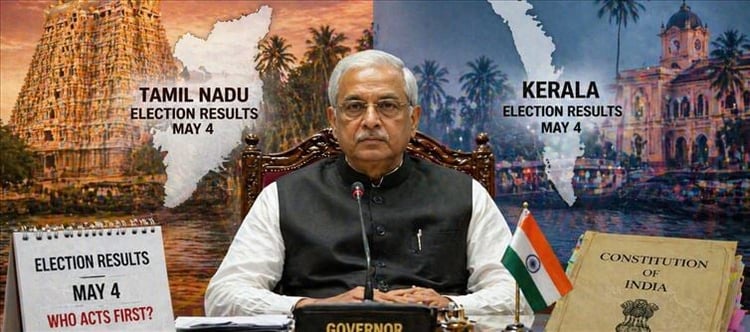

On May 4, as election results roll out in both tamil Nadu and Kerala, the spotlight won’t just be on who wins—but on who acts. Because behind the scenes lies a constitutional responsibility that’s time-sensitive and critical: inviting the majority party to form the government. And this time, that responsibility rests with one individual handling two states at once. That’s where the unease begins.
The Concern, Broken Down
Two States, One Decision-Maker
The governor of Kerala, Rajendra Vishwanath Arlekar, is currently also holding additional charge as tamil Nadu’s Governor. On paper, it’s administrative convenience. In practice, it raises timing concerns.
Simultaneous election Results
Both states are set to declare results on the same day. That means parallel political activity, negotiations, and decisions—each requiring immediate attention.
Priority Will Naturally Tilt
Logically, the Governor’s primary responsibility will lean toward Kerala, the state where he holds full-time office. tamil Nadu risks becoming secondary in that crucial window.
A Time-Sensitive Constitutional Duty
Inviting the majority party to form the government isn’t symbolic—it’s procedural and urgent. Any delay can create uncertainty, speculation, and instability.
What If There’s a Delay?
If logistical constraints prevent immediate presence in tamil Nadu, even a short delay could raise questions. In politics, gaps—however brief—can escalate quickly.
The Larger Question of Preparedness
Since the replacement of R. N. Ravi, the absence of a full-time governor for tamil Nadu has become a point of scrutiny. Why hasn’t a dedicated appointment been made?
Perception Matters as Much as Process
Even if everything proceeds smoothly, the optics of divided attention during such a critical moment can fuel doubt among the public.
Closing Punch:
Elections decide who governs—but systems decide how smoothly that transition happens. When responsibilities overlap at the highest level, even routine processes can feel uncertain. The real question isn’t whether things will go wrong—it’s why leave room for doubt in the first place?
 click and follow Indiaherald WhatsApp channel