
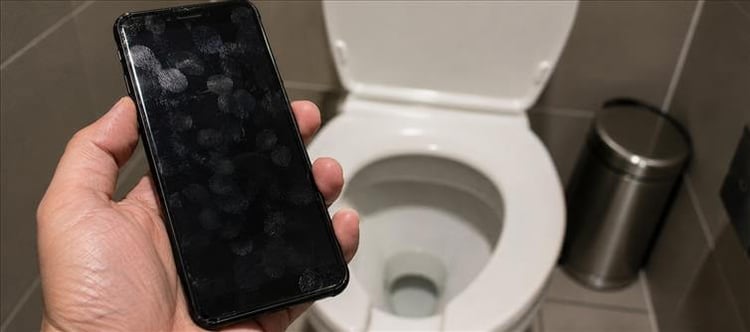


people panic about dirty public bathrooms, avoid touching toilet seats, and wash their hands obsessively after using restrooms. Then, seconds later, they casually grab their phones — the same phones they carry everywhere, place on restaurant tables, gym floors, office desks, beds, and sometimes even inside bathrooms themselves.
Here’s the disgusting reality: your smartphone likely carries far more bacteria than a toilet seat. Not marginally more. Studies have repeatedly suggested it can hold up to 10 times more germs.
Yes, the object glued to your hand all day may be one of the filthiest things in your daily life.
And honestly, it makes perfect sense once you think about it. Toilet seats are cleaned regularly because people expect them to be dirty. Phones, meanwhile, are treated like sacred personal devices. We touch them constantly but seldom sanitize them properly. They absorb sweat, skin oils, food residue, dust, and whatever microscopic hitchhikers your fingers collect throughout the day.
Then comes the truly horrifying part: proximity.
You don’t press toilet seats against your face. You don’t eat while touching them. You don’t take them into bed and scroll endlessly inches away from your mouth and eyes. But phones? Humans practically fuse with them. The average person touches their smartphone thousands of times per day, turning it into a portable bacteria transfer machine.
Modern life created a weird contradiction: we became obsessed with visible cleanliness while ignoring invisible contamination on the objects we use most. people disinfect kitchen counters religiously while happily using phones during meals without a second thought.
Of course, not all bacteria are dangerous, and your immune system handles countless microbes daily. But the statistic still lands like a psychological jump scare because it completely destroys the illusion that our most-used object is somehow “clean.”
Your phone may look sleek, premium, and polished.
Microbiologically, it’s basically a tiny handheld ecosystem.
 click and follow Indiaherald WhatsApp channel