


Markets don’t just run on money anymore.
They run on confidence, perception, and narrative.
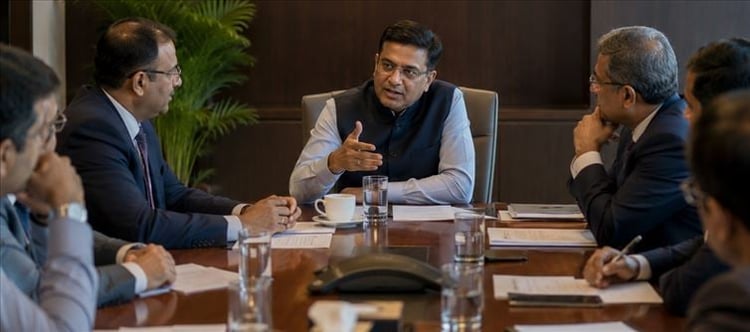
And according to reports now circulating in financial and political circles, the indian government has allegedly advised prominent business leaders to avoid publicly criticizing the current economic situation. Instead, they are reportedly being encouraged to reassure retail investors and maintain optimism around the equity markets.
That alone would have triggered debate.
But what made the conversation explosive were the alleged talking points themselves.
Phrases like “the worst is behind us,” “fuel price hikes are necessary,” and “better returns are ahead” are reportedly being pushed as part of a broader effort to calm investor sentiment and prevent panic in the markets.
If true, this reveals something extremely important:
The government understands that economic psychology has become just as critical as economic data itself.
The timing of this alleged advisory is also drawing attention. It reportedly surfaced shortly after uday Kotak made comments expressing concern about parts of the economy and market conditions. His remarks triggered widespread discussion among investors already nervous about inflation, rising costs, global uncertainty, and slowing consumption trends.
And that’s where the situation becomes politically sensitive.
Because governments across the world fear one thing more than bad numbers: collapsing confidence.
Once retail investors lose faith, markets can spiral rapidly. Spending slows down. Panic spreads faster than facts. Economic weakness becomes psychological contagion. That’s why modern governments increasingly focus not just on policy, but on controlling sentiment itself.
Critics, however, see this very differently.
They argue that encouraging business leaders to soften criticism risks creating an artificial optimism bubble disconnected from ground reality. According to them, economies recover through transparency, structural reform, and honest assessment — not through carefully managed messaging campaigns.
Supporters counter that maintaining stability during volatile times is essential and that excessive pessimism from influential corporate figures can itself worsen economic conditions unnecessarily.
That tension is now becoming the real story.
Not just whether the economy is strong or weak…
But whether governments are beginning to treat public economic perception as something that must be actively managed, shaped, and protected at all costs.
 click and follow Indiaherald WhatsApp channel