


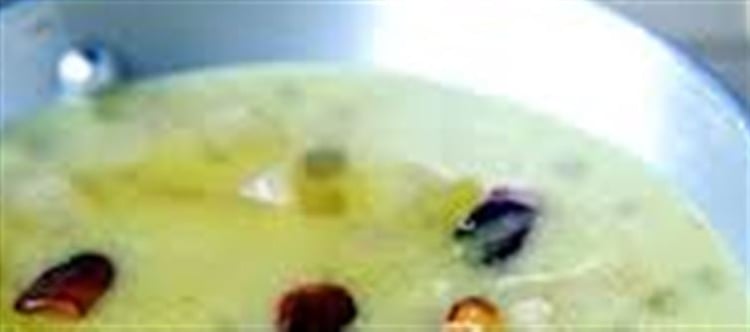

🍯 Vazhaithandu Payasam Recipe
(Banana Stem kheer – A Refreshing and Nutritious Dessert)
Ingredients:
- 1 cup finely chopped banana stem (vazhaithandu)
- 1/4 cup moong dal (yellow split lentils)
- 1/2 cup jaggery (or as per taste)
- 1 cup coconut milk (or regular milk)
- 1/4 tsp cardamom powder
- 2 tbsp ghee (clarified butter)
- 8–10 cashews
- 8–10 raisins
- 1 tsp grated coconut (optional)
- A pinch of saffron strands (optional)
- A pinch of salt
🧑🍳 Instructions:
1. Prepare the banana Stem (Vazhaithandu):
o Clean the banana stem thoroughly by removing the outer layers. Cut the inner portion into small, fine pieces.
o To remove excess fiber, chop the banana stem finely and soak the pieces in water with a pinch of turmeric for about 10-15 minutes. After soaking, squeeze out any excess water.
2. Cook Moong Dal:
o In a pan, dry roast the moong dal for 2-3 minutes until it turns lightly golden.
o Then, add about 1 cup of water to the dal and cook until the dal becomes soft and mushy. This will take about 10–12 minutes on low heat. Set aside.
3. Cook the banana Stem:
o In the same pan, heat 1 tsp of ghee. Add the chopped banana stem pieces and sauté for 3-4 minutes until they soften slightly.
o Add 1 cup of water and cook the banana stem for another 5-7 minutes on medium heat, allowing it to soften completely.
4. Add Coconut Milk and Jaggery:
o Once the banana stem is cooked, add the cooked moong dal to the pan. Stir well to combine.
o Add coconut milk and jaggery to the mixture, and cook on low heat until the jaggery melts completely and the mixture thickens slightly. If you prefer a richer consistency, you can add more coconut milk or regular milk.
5. Flavoring and Garnish:
o Add cardamom powder and a pinch of saffron strands (if using). Stir well to mix all the ingredients.
o In a separate small pan, heat 1 tbsp of ghee and fry cashews and raisins until golden brown. Add these fried nuts and raisins to the payasam.
6. Serve:
o Once the payasam has thickened to your desired consistency, remove from heat. You can serve it warm or chilled as per preference.
💡 Tips for Perfect Vazhaithandu Payasam:
- Banana Stem Preparation: The banana stem can be a bit tricky to clean. Make sure to remove the hard outer layers and chop the inner part into small, fine pieces to reduce the fibrous texture.
- Cooking Moong Dal: The moong dal should be soft but not mushy. It should blend nicely with the other ingredients without losing its shape completely.
- Sweetness Adjustment: Adjust the jaggery to your taste. jaggery tends to be more flavorful and nutritious than refined sugar, but if you prefer a lighter sweetness, you can reduce the quantity or use a sugar substitute.
- Consistency: Payasam can be adjusted for consistency based on preference. If it becomes too thick, you can add extra coconut milk or water. If you like a richer taste, increase the amount of coconut milk.
🌿 Health Benefits of Vazhaithandu Payasam:
1. Rich in Fiber (Banana Stem):
Banana stem is an excellent source of dietary fiber, which aids in digestion and helps prevent constipation. It supports healthy bowel movements and detoxification of the body.
2. Promotes Digestion (Banana Stem and Moong Dal):
Banana stem contains natural antioxidants that support digestion and liver health. When combined with moong dal, which is easy to digest and rich in protein, the payasam becomes an excellent dish for improving digestive health.
3. Supports Weight Loss (Banana Stem and Jaggery):
Banana stem is low in calories and rich in water content, making it an ideal food for weight loss. It keeps you full for longer, preventing overeating. jaggery, though sweet, is less harmful than refined sugar and provides natural energy without sharp spikes in blood sugar.
4. Detoxifying (Banana Stem):
Banana stem is known for its detoxifying properties. It helps cleanse the kidneys and urinary tract by flushing out toxins. It also promotes the proper functioning of the kidneys, reducing the risk of kidney stones.
5. Heart-Healthy (Moong Dal and Coconut Milk):
Moong dal is a great source of plant-based protein and contains essential amino acids that help in maintaining muscle mass and promoting heart health. Coconut milk, on the other hand, is rich in healthy fats that support overall heart health and improve cholesterol levels.
6. Rich in antioxidants (Cardamom and Coconut Milk):
Cardamom is a potent antioxidant that helps fight oxidative stress in the body. Coconut milk also contains antioxidants that promote overall health and protect cells from damage.
7. Boosts Immunity (Ghee and Cashews):
Ghee used in the recipe has immune-boosting properties due to its healthy fats and butyrate. The addition of cashews provides healthy fats and zinc, which is essential for boosting the immune system and fighting infections.
8. Good for Skin and Hair (Coconut Milk and Ghee):
The healthy fats in coconut milk and ghee nourish the skin and hair, helping them stay hydrated and preventing dryness. Coconut milk is known for its skin-soothing properties, making this payasam beneficial for those with dry or irritated skin.
9. Gluten-Free and Vegan Option:
Vazhaithandu Payasam can be made gluten-free by using coconut milk and moong dal, making it suitable for those with gluten sensitivities. You can also make it vegan by opting for plant-based milk like coconut or almond milk.
Conclusion:
Vazhaithandu Payasam is a unique and nourishing South indian dessert made from banana stem, moong dal, and coconut milk. It combines the detoxifying and digestive benefits of banana stem with the protein-rich goodness of moong dal and the richness of coconut milk. A perfect choice for a healthy dessert during festivals like Vinayaka Chaturthi or Onam, or simply as a nutritious treat to enjoy anytime. 🌟
Disclaimer:
The views and opinions expressed in this article are those of the author and do not necessarily reflect the official policy or position of any agency, organization, employer, or company. All information provided is for general informational purposes only. While every effort has been made to ensure accuracy, we make no representations or warranties of any kind, express or implied, about the completeness, reliability, or suitability of the information contained herein. Readers are advised to verify facts and seek professional advice where necessary. Any reliance placed on such information is strictly at the reader’s own risk.
 click and follow Indiaherald WhatsApp channel