


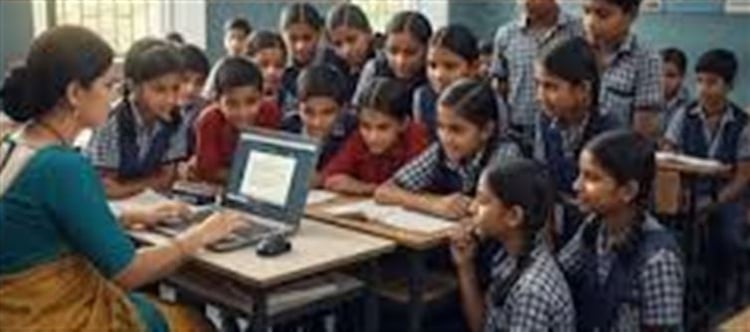

The Central Board of Secondary education (CBSE) has introduced several major reforms aimed at transforming India’s school education system. The new changes are designed to shift learning from rote memorization to conceptual understanding and skill-based education.
What Has Changed in the CBSE System?
The updated approach focuses on making education more practical, flexible, and student-friendly. Instead of only theory-based learning, students will now experience:
- More application-based questions
- Reduced rote learning
- Increased focus on competency and skills
- Balanced weightage across subjects
Key Changes in the CBSE education System
1. More Competency-Based Questions
CBSE now includes more questions that test:
- Understanding of concepts
- Real-life application
- Analytical thinking
👉 This replaces traditional memory-based questions.
2. Balanced Subject Structure
The new system gives equal importance to:
- Science
- Mathematics
- Social Science
- Languages
- Skill-based subjects
This ensures students develop both academic and practical knowledge.
3. Introduction of Skill-Based Learning
CBSE is promoting skill-oriented education such as:
- Coding and Artificial Intelligence basics
- Financial literacy
- Digital skills
- Entrepreneurship education
👉 This helps students become job-ready early.
4. Reduced Exam Stress
CBSE has taken steps to:
- Make exams more flexible
- Include internal assessments
- Reduce dependency on final exams
5. More Internal Assessments
Students are now evaluated through:
- Projects
- Assignments
- Class participation
- Practical work
This reduces pressure from one-time examinations.
Focus on Holistic Development
The new CBSE model aims at:
- Critical thinking
- Creativity
- Communication skills
- Problem-solving ability
👉 The goal is not just marks, but overall student growth.
Impact on Students
Positive Effects:
- Better understanding of subjects
- Less exam pressure
- Improved practical knowledge
- More career-ready skills
Challenges:
- Students must adapt to new question patterns
- Teachers need updated training
- Schools must improve infrastructure for skill-based learning
Conclusion
CBSE’s new education reforms mark a major shift in India’s schooling system. The focus is now on understanding subjects deeply, developing skills, and preparing students for real-world challenges.
👉 In simple terms:
Less memorization, more learning with understanding and application.
Disclaimer:
The views and opinions expressed in this article are those of the author and do not necessarily reflect the official policy or position of any agency, organization, employer, or company. All information provided is for general informational purposes only. While every effort has been made to ensure accuracy, we make no representations or warranties of any kind, express or implied, about the completeness, reliability, or suitability of the information contained herein. Readers are advised to verify facts and seek professional advice where necessary. Any reliance placed on such information is strictly at the reader’s own risk.
 click and follow Indiaherald WhatsApp channel