


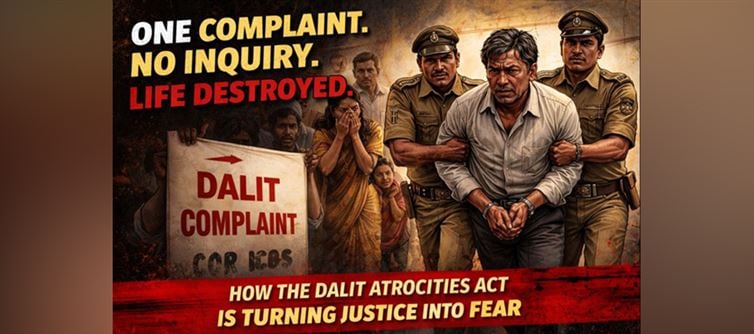

A law can be just in intent and devastating in execution at the same time. When arrest comes before inquiry, when bail becomes a gamble, and when acquittal arrives too late to repair the damage, justice stops feeling like justice. It starts feeling like roulette. The debate around misuse isn’t about denying oppression or diluting protection — it’s about a far simpler question: what happens when the process itself becomes the punishment?
🚨 The Trigger Point: One Allegation, Immediate Consequences
In certain disputes, a single allegation alleging a caste-based slur can set off a chain reaction. There is no mandatory preliminary inquiry. police can register a case, make an arrest, and only then does the accused get a chance to apply for bail before a court. Guilt or innocence is not examined first. The machinery moves regardless.
This isn’t theory. It’s a procedure.
⛓️ What Happens Before the Trial Even Begins
Long before evidence is weighed, the fallout is immediate and brutal:
Public humiliation and social stigma
Trauma to family members
Job loss or suspension
Days or weeks in custody
Mounting legal costs
Bail uncertainty, dependent on discretion
Even if the case later collapses, none of this is undone.
🧠 Acquittal Doesn’t Erase the Damage
An acquittal restores legal innocence — not lost time, reputation, or mental health. The punishment has already been served through the process itself. history offers grim reminders of how prolonged incarceration can result from false or motivated complaints, where years — even decades — are lost before the truth is acknowledged.
Justice delayed isn’t just justice denied.
Sometimes, it’s justice inverted.
🧩 This Isn’t About Ideology. It’s About Safeguards.
Questioning the absence of safeguards is not an attack on social justice. It’s a demand for balance. Laws designed to protect the vulnerable must also protect against malicious misuse, or they risk becoming tools of intimidation. Any system that grants immense power without proportional checks invites abuse — not because people are bad, but because incentives are misaligned.
🤐 Why the Conversation Is Politically Radioactive
In a democracy, some questions are deemed too dangerous to ask. Raise concerns, and you risk being branded as insensitive or worse. As a result, legitimate discussions about due process get buried under fear. Silence becomes safer than reform. And laws, once frozen by politics, stop evolving with reality.
🎓 Now the Same Logic Is Entering Campuses
What makes this debate urgent is its expansion beyond police stations into academic spaces. Through regulations and grievance mechanisms framed under equity and inclusion, a miniature version of the same approach has begun appearing in universities, where complaints can trigger severe consequences without robust preliminary scrutiny.
Institutions meant for learning are becoming arenas of fear.
This shift is visible in frameworks shaped by bodies like the University Grants Commission, where intent is noble, but safeguards remain thin.
⚠️ Protection Without Process Is a Risk to Everyone
A system that protects some by terrorising others eventually loses moral authority. The answer is not rollback. The answer is due process:
Mandatory preliminary inquiries
Clear evidentiary thresholds
Accountability for false complaints
Speedy hearings and time-bound bail
These don’t weaken justice.
They strengthen it.
🩸 Final Word
Laws should punish guilt — not proximity, not accusation, not animosity. When fear replaces fairness, society doesn’t become safer; it becomes quieter. And quiet systems don’t correct themselves.
This isn’t about sides.
It’s about logic, liberty, and the courage to fix what’s broken — before the punishment becomes the norm and justice becomes the exception.
 click and follow Indiaherald WhatsApp channel