



🔥 When a Woman Watches a Sport, and the Internet Loses Its Mind
A sports match. A casual outfit. A public appearance.
That should have been the end of the story.
Instead, it became a case study in how the internet still treats women’s bodies as public property—especially when the woman in question is Samantha.
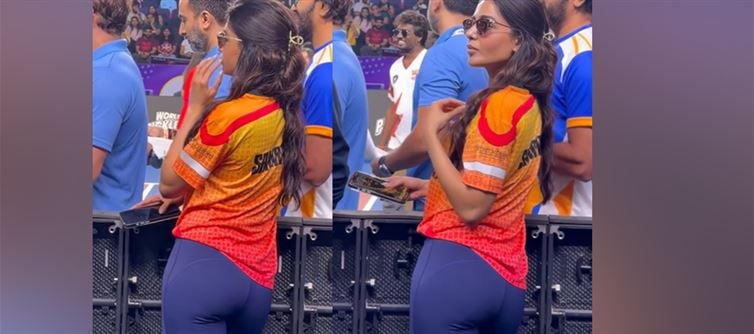
samantha turned up to watch a pickleball match dressed exactly like thousands of athletes and spectators do worldwide: a sports tee and fitted pants. No costume. No performance. No invitation. Yet social media erupted—not with commentary on the sport, but with zoomed-in screenshots, vulgar remarks, and conspiratorial accusations about her “intent”.
⚡ A Sporting Event, Hijacked
Let’s state the obvious: sportswear fits the body.
That is its function.
But the moment samantha appeared in comfortable athletic clothing, the focus shifted—from the match to her body, from public presence to private scrutiny. Close-up clips circulated. Comment sections descended into crude commentary. The camera angle became the conversation.
This wasn’t accidental virality.
This was deliberate objectification.
🧠 The Familiar, Tired Accusation
Some commenters went further, claiming, “She knows her fan base. She did this on purpose.”
This argument appears every time a woman exists confidently in public. It is the oldest trick in the misogyny handbook:
If she is visible, she is seeking attention
If she is comfortable, she is inviting commentary
If she is famous, she forfeits dignity
It quietly shifts blame—from the gaze to the woman being gazed at.
🧨 Clothes Are Not Consent
This moment exposes a dangerous cultural reflex:
The idea that a woman’s clothing is a signal rather than a choice.
Athletes wear fitted gear.
Gym-goers wear stretch fabric.
Men do the same—without becoming trending topics.
The outrage wasn’t about the outfit.
It was about who felt entitled to interpret it.
🎯 Zoom culture and the Loss of Decency
What made this episode uglier was not just the commentary, but the behaviour:
Cropped screenshots
Slow-motion clips
Frame-by-frame voyeurism
This is not fandom.
This is surveillance dressed up as curiosity.
And it reveals how easily technology amplifies the worst instincts when empathy is absent.
🪞 The Real Question We Keep Avoiding
Why is it still easier to police a woman’s body than to question the audience watching it?
Why is comfort rebranded as provocation?
Why does confidence threaten people so much?
samantha didn’t “break” the internet.
The internet exposed itself.
🏁 Final Word
A woman went to watch a sport.
She dressed for comfort.
She owed no explanations.
The viral noise says nothing about her intent—and everything about our unresolved obsession with controlling women’s bodies.
Until we learn to look without entitlement, this story will keep repeating—different woman, same shameful reaction.
 click and follow Indiaherald WhatsApp channel