


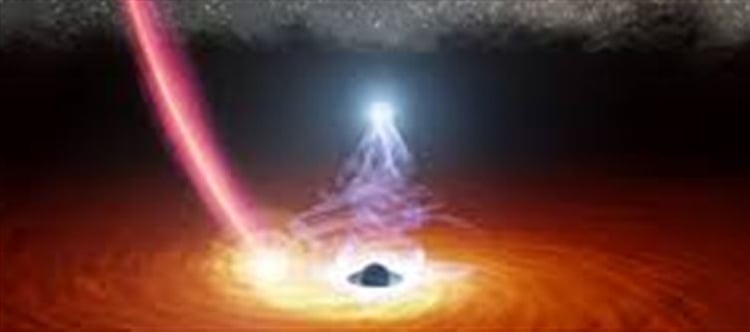

Black holes are already mysterious enough, but runaway black holes—those speeding through the galaxy—pose a whole new level of cosmic chaos. Here’s how these cosmic speedsters can disrupt planetary systems and make astronomers sit up in alarm.
1. Cosmic Bull in the Galactic Shop
Runaway black holes can zoom through a galaxy at hundreds of kilometers per second, disrupting everything in their path. When a planetary system gets too close, the gravitational pull can send planets flying out of orbit—or even eject them entirely into interstellar space.
2. Planetary Orbits Gone Wild
Even if a black hole doesn’t directly collide with a star, its gravity can warp the orbits of planets, causing wild swings in distance from their star. This could turn a temperate planet into a frozen wasteland or scorch it with extreme heat.
3. Stellar Companion Breakups
Binary star systems are especially at risk. A passing runaway black hole can split apart binary stars, sending planets hurtling on chaotic trajectories, disrupting years of stable orbits in minutes.
4. Cosmic Pinball: Planets Ejected Into Space
Some planets don’t just have their orbits altered—they get completely flung into interstellar space. These “rogue planets” drift alone in the galaxy, cut off from their sun, and likely frozen to near absolute zero.
5. Tidal Terrors: Spaghettification Risk
If a planet orbits too close to a runaway black hole, it could experience tidal forces strong enough to stretch and distort it—a phenomenon scientists call spaghettification. While dramatic, even a near-miss can cause gravitational tidal disruptions in the planetary system.
6. Triggering Stellar Chaos
Runaway black holes can destabilize not just planets but also stars. A star’s orbit in a cluster can be altered, potentially triggering stellar collisions or supernova events, with catastrophic ripple effects on surrounding planetary systems.
7. Dark Matter Hunters
Interestingly, these rogue black holes also interact with dark matter in ways we are just beginning to understand. Their high-speed passage can create subtle gravitational waves and galactic ripples, giving astronomers indirect ways to detect them before planetary chaos occurs.
💡 Cosmic Takeaway: While the odds of a runaway black hole tearing through our solar system are extremely low, these cosmic wanderers remind us that the galaxy is a dynamic and sometimes dangerous place—where even planets aren’t safe from celestial mischief.
Disclaimer:
The views and opinions expressed in this article are those of the author and do not necessarily reflect the official policy or position of any agency, organization, employer, or company. All information provided is for general informational purposes only. While every effort has been made to ensure accuracy, we make no representations or warranties of any kind, express or implied, about the completeness, reliability, or suitability of the information contained herein. Readers are advised to verify facts and seek professional advice where necessary. Any reliance placed on such information is strictly at the reader’s own risk.
 click and follow Indiaherald WhatsApp channel