


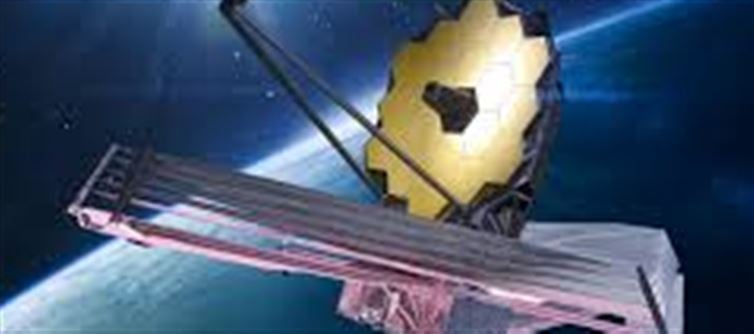

The James Webb Space Telescope (JWST) is a groundbreaking space observatory that is set to revolutionize our understanding of the universe. It is the most powerful telescope ever built, designed to explore the deepest reaches of space and time. Unlike its predecessor, the Hubble Space Telescope, Webb is designed to observe the universe in infrared, which allows it to see through cosmic dust and gas and observe objects too distant and faint for other telescopes to capture.
Let’s dive into the key aspects of this incredible scientific tool and understand how it works.
1. A Collaboration of Giants
The james Webb Space Telescope is a collaboration between multiple space agencies:
- NASA (National Aeronautics and Space Administration)
- ESA (European Space Agency)
- CSA (Canadian Space Agency)
This global effort brings together cutting-edge technology and expertise from around the world to create a telescope that is far more advanced than anything humanity has ever built.
2. What Makes the james Webb Telescope So Special?
a) Infrared Vision: Seeing Through the Darkness
While telescopes like Hubble observe primarily in visible light and some ultraviolet or X-rays, the james Webb Space Telescope specializes in infrared light. This allows it to see:
- Faint distant galaxies and stars that are billions of light-years away
- Stars and planetary systems in the process of formation through gas and dust clouds that visible light can’t penetrate
- Objects too far away to be captured by traditional telescopes
Infrared light has longer wavelengths than visible light, allowing Webb to observe the cooler, older, and more distant parts of the universe.
b) Huge Mirror for Better Resolution
One of Webb’s most remarkable features is its giant 6.5-meter primary mirror. This is much larger than Hubble’s 2.4-meter mirror and allows Webb to capture more light, which leads to:
- Higher resolution images
- The ability to see farther into space, revealing details from the earliest galaxies formed after the Big Bang
This large mirror is made up of 18 hexagonal segments, and it unfolds in space to create the largest space telescope mirror ever built.
c) Ultra-Cold Instruments for High Sensitivity
The infrared instruments on Webb require extreme cold temperatures to function efficiently. To achieve this:
- Webb is equipped with a sunshield the size of a tennis court that blocks sunlight and keeps its instruments cold enough to detect faint infrared signals.
- The telescope operates at a temperature of about -223°C (50K), much colder than the temperature of outer space itself. This ultra-cold environment prevents the telescope from emitting its own infrared radiation, which would obscure the observations.
3. The Key Goals of the james Webb Space Telescope
Webb's scientific objectives are vast, but some of the key goals include:
a) Studying the First Galaxies
By observing the first galaxies that formed after the Big Bang, Webb will help astronomers understand:
- How early galaxies evolved
- The formation of stars, black holes, and planets
b) Investigating Exoplanets and Their Atmospheres
Webb will study planets outside our solar system, known as exoplanets:
- It can detect chemical compositions of exoplanet atmospheres and search for signs of habitability or even life.
- It will help scientists better understand the potential for life on other worlds.
c) Observing the Birth of Stars and Planets
Webb’s infrared capabilities allow it to peer inside dense clouds of gas and dust where stars and planets are being born:
- This helps scientists learn more about how solar systems like ours came to be.
- It also aids in studying the formation of stars and planetary bodies.
4. Webb’s Unusual Orbit: L2 Location
Unlike most telescopes that orbit Earth, Webb orbits the second Lagrange point (L2), located about 1.5 million kilometers (or roughly 1 million miles) from Earth. L2 is an ideal location for Webb because:
- It offers a stable environment away from Earth’s heat and light, making it easier to observe faint signals.
- It provides a clear line of sight to the entire sky, allowing Webb to observe the universe without interference from Earth’s atmosphere or light pollution.
This unique orbit also helps Webb remain in a constant, stable position, requiring minimal fuel usage to keep it in place.
5. The Unfolding Process: A Complex Deployment
When Webb launched on December 25, 2021, it began a highly complex deployment sequence:
- Unfolding its sunshield: Webb's massive sunshield had to unfold in space to protect its instruments from the Sun’s heat.
- Mirror Deployment: Webb’s mirror segments were precisely aligned after being folded during launch.
- Cooling Down: Webb’s instruments had to cool to temperatures below 50 K before they could begin observing.
This deployment process was carefully designed to ensure that everything worked perfectly in the vacuum of space — a task that took several months.
6. Webb’s First Images and Discoveries
After reaching L2 and completing its setup, Webb began transmitting its first images back to Earth in July 2022. These stunning photos have already amazed astronomers and the public alike, showcasing the telescope’s extraordinary capabilities:
- Detailed images of distant galaxies never seen before
- Stunning close-ups of nebulae where stars are being born
- Spectacular views of planetary atmospheres and faraway exoplanets
These first images are just the beginning. Webb will continue to send back groundbreaking data that will shape our understanding of the universe.
7. Conclusion: A New Era of Exploration
The James Webb Space Telescope marks a new era of space exploration, providing a glimpse into the distant past and helping to answer some of humanity’s most profound questions about the cosmos:
- How did the universe begin?
- Are we alone in the universe?
- What is the nature of distant galaxies, stars, and exoplanets?
As Webb continues its mission, it is set to transform our understanding of the universe, offering answers to mysteries that have long eluded us.
Disclaimer:
The views and opinions expressed in this article are those of the author and do not necessarily reflect the official policy or position of any agency, organization, employer, or company. All information provided is for general informational purposes only. While every effort has been made to ensure accuracy, we make no representations or warranties of any kind, express or implied, about the completeness, reliability, or suitability of the information contained herein. Readers are advised to verify facts and seek professional advice where necessary. Any reliance placed on such information is strictly at the reader’s own risk.
 click and follow Indiaherald WhatsApp channel