


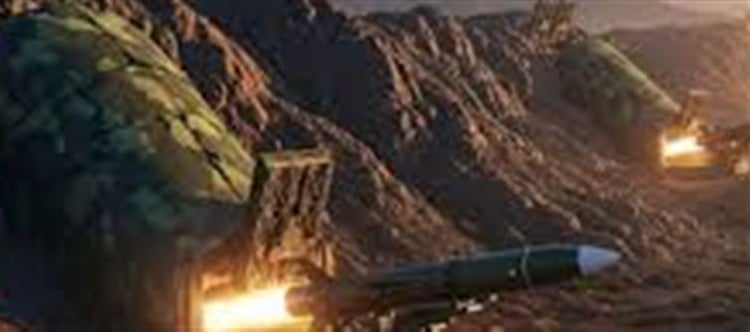

Iran’s ability to launch missiles from deep underground tunnels and silos has become a critical part of its military strategy, blending engineering innovation with decades of warfare experience. This expertise makes it harder for adversaries to detect, target, or destroy its missile capabilities.
1. Origins of Iran’s Tunnel-Based Missile Strategy
Iran’s tunnel missile capability traces back more than 40 years. During the 1980–88 Iran‑Iraq War, iran suffered heavy missile attacks and recognised the need for a secure and survivable launch capability to deter aggressors. This motivated Tehran to invest in long‑range missiles and buried launch infrastructure.
In the 1990s, iran received early missile technology (such as Scud‑derived designs) from partners like North Korea, which helped both in missile development and later in building hardened underground facilities.
2. What Is Tunnel-Based Missile Launch Technology?
Traditional silo systems are deep vertical launch shafts designed to protect missiles from air attack. iran has taken this concept further by creating networks of missile tunnels and underground bases that are extremely hard to detect with satellites or radar.
These tunnels act like a giant underground rail system where missiles are stored and moved to launch points automatically, allowing rapid successive launches — something akin to a revolver mechanism underground.
3. How the Tunnel Launch System Works
- Hidden Entrances: The launch points are covered with soil, concrete, or camouflage, making them difficult to spot from overhead.
- Automated Movement: Missiles are placed vertically on rail cars inside the tunnels and quickly moved to the opening when ordered.
- Fast Reaction: Solid‑fuel missiles like Iran’s later designs (e.g., Saejil) stay ready to fire without time‑consuming fueling, allowing quicker launch response.
This system enables iran to launch several missiles in a short period and from multiple locations, complicating enemy targeting efforts.
4. Development and Expansion Over Time
Since the 1980s, Iran’s missile programme has evolved through continuous improvements:
- 1990s: Indigenous missile production begins, especially with Scud‑derived systems.
- 2015–2020: iran publicly displays extensive underground missile bases and automated launch tunnels — termed “missile cities” — that demonstrate sophisticated storage and launch readiness.
- 2020s: Automated systems that can position multiple missiles (such as the so‑called Missile Shower System) allow rapid sequential firing from underground locations.
These deployments are spread across the country and designed to ensure survivability and deterrence even under attack.
5. Strategic Advantages of Tunnel Launch Systems
Iran’s tunnel launch technology provides several military benefits:
- Survivability: Missiles hidden deep underground are less vulnerable to pre‑emptive strikes.
- Rapid Salvo Launches: Automated systems allow multiple missiles to be fired in quick succession before counter‑strikes can occur.
- Unpredictable Locations: Tunnel networks increase difficulty for intelligence and surveillance to locate launch sites.
These traits strengthen Iran’s role as a regional missile power and bolster its strategic deterrent.
6. Comparisons with Other Countries
Other major military powers also use silo‑based systems, but often in different ways:
- United States, Russia, China: Use deep silos or fixed underground facilities, but generally do not deploy the rapid rail‑based tunnel systems iran has developed.
- North Korea: Known for missile tunnels and hardened underground bases, which influenced Iran’s development.
While iran does not match the overall technological sophistication of superpowers like the U.S. or Russia, its tunnel launch methods offer a significant regional deterrent capability.
7. Conclusion
Iran’s expertise in launching missiles from tunnels is the result of decades of strategic planning, technological adaptation, and battlefield experience. By combining deep underground infrastructure, automated launch mechanisms, and solid‑fuel missiles, Tehran has developed a system that’s harder to detect and more resilient against surprise attacks — giving it a distinct edge in missile deterrence and regional power projection.
Disclaimer:
The views and opinions expressed in this article are those of the author and do not necessarily reflect the official policy or position of any agency, organization, employer, or company. All information provided is for general informational purposes only. While every effort has been made to ensure accuracy, we make no representations or warranties of any kind, express or implied, about the completeness, reliability, or suitability of the information contained herein. Readers are advised to verify facts and seek professional advice where necessary. Any reliance placed on such information is strictly at the reader’s own risk.
 click and follow Indiaherald WhatsApp channel