


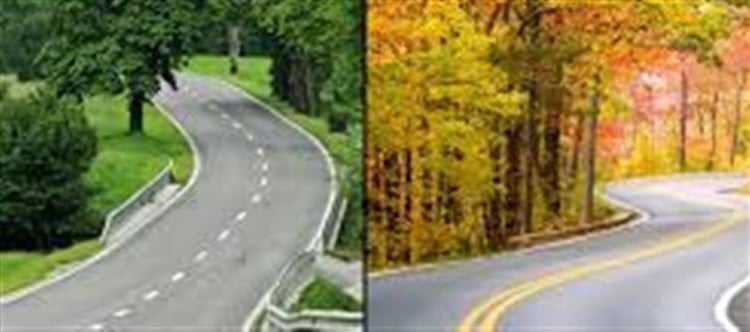

Road markings play a crucial role in maintaining traffic safety and guiding drivers. Among the most common markings are white and yellow lines, each serving specific purposes. Understanding their meaning can help reduce accidents and improve road discipline.
1. Purpose of Road Markings
Road markings are painted on the road surface to:
· Guide vehicles and pedestrians
· Indicate traffic rules and regulations
· Separate lanes and directions of traffic
· Enhance visibility during day and night
They act as visual instructions that complement road signs, especially in busy or complex traffic areas.
2. White Lines on Roads
White lines are primarily used to separate traffic moving in the same direction. They indicate lanes and help vehicles stay in their designated paths.
Types of White Lines
1. Solid White Line
o Meaning: Discourages or prohibits lane changing.
o Example: Edge lines on highways or lanes approaching intersections.
2. Broken (Dashed) White Line
o Meaning: Allows lane changing when safe.
o Example: Lane separators on multi-lane roads.
3. Zigzag White Line
o Meaning: Warning near pedestrian crossings or sensitive areas.
Key Point: White lines are associated with same-direction traffic management.
3. Yellow Lines on Roads
Yellow lines are used to separate traffic moving in opposite directions or to indicate no-parking zones.
Types of Yellow Lines
1. Single Solid Yellow Line
o Meaning: Traffic should keep left; overtaking or crossing may be restricted in certain areas.
2. Double Solid Yellow Lines
o Meaning: Overtaking or crossing the line is strictly prohibited.
o Example: Roads with high-speed traffic or dangerous curves.
3. Broken Yellow Line
o Meaning: Overtaking is allowed when it is safe.
4. Yellow Kerb Lines
o Meaning: Indicate no parking zones or restricted stopping areas.
Key Point: Yellow lines are primarily for opposite-direction traffic control and parking restrictions.
4. Summary of Differences
Feature
White Lines
Yellow Lines
Direction
Same-direction traffic
Opposite-direction traffic
Purpose
Lane separation, guidance
No overtaking, no parking, warning
Solid Line
Stay in lane, avoid crossing
Do not cross, strict prohibition
Broken Line
Lane changing allowed
Overtaking allowed when safe
5. Importance of Following Road Markings
Following road markings ensures:
· Safety: Prevents collisions and head-on accidents
· Smooth Traffic Flow: Reduces congestion
· Legal Compliance: Violating road markings can lead to fines and penalties
Road markings are designed based on careful traffic studies. Ignoring them can have serious consequences.
Conclusion
White and yellow lines are not just decorative; they are critical safety tools on roads. White lines guide vehicles in the same direction, while yellow lines manage opposite-direction traffic and indicate restrictions. Observing these markings is essential for safe and disciplined driving.
Disclaimer:
The views and opinions expressed in this article are those of the author and do not necessarily reflect the official policy or position of any agency, organization, employer, or company. All information provided is for general informational purposes only. While every effort has been made to ensure accuracy, we make no representations or warranties of any kind, express or implied, about the completeness, reliability, or suitability of the information contained herein. Readers are advised to verify facts and seek professional advice where necessary. Any reliance placed on such information is strictly at the reader’s own risk.
 click and follow Indiaherald WhatsApp channel