


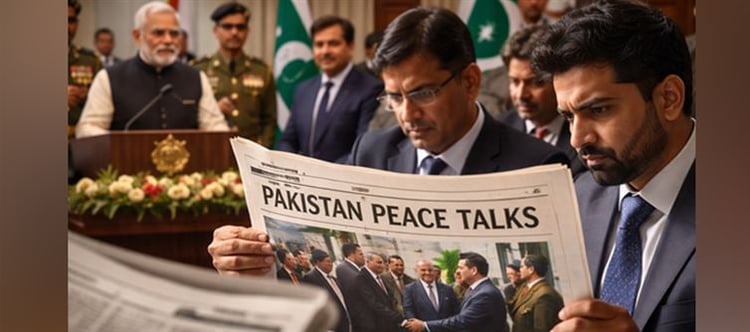

“Narrative Shift or Strategic Illusion?” — Has india Lost the Messaging war on
In geopolitics, perception is power. For years, india has worked to position pakistan as a state linked to cross-border militancy on the global stage. That narrative has shaped diplomatic conversations, alliances, and international opinion. But recent developments suggest that the messaging landscape may be evolving—and not entirely in India’s favor.
A Changing Optics Game
Following recent military and diplomatic developments—referred to by some as “Operation Sindoor”—there’s a growing argument that pakistan has become more strategic in managing its global image. Whether through diplomatic outreach or calibrated messaging, the perception battle appears more contested than before.
The Power of Peace Signals
Peace initiatives, even symbolic ones, can significantly alter international perception. When tensions de-escalate publicly, it becomes harder for one side to sustain a singular narrative without scrutiny. For global observers, the story becomes more complex, less black-and-white.
Narrative Fatigue on the Global Stage
There’s also an element of fatigue. international actors often prioritize stability over prolonged conflict narratives. Over time, repeated messaging—no matter how serious—can lose its impact if not reinforced by fresh developments or widely accepted evidence.
Domestic politics vs Global Messaging
Here’s where the contrast sharpens. What resonates internationally doesn’t always align with what works domestically. Political narratives can remain effective within electoral contexts even if their global traction weakens. The two arenas operate on entirely different logics.
The Bigger Question
Is this a genuine shift in global perception—or just a temporary recalibration driven by current events? That remains open. But one thing is clear: narratives in geopolitics are never permanent. They evolve, adapt, and sometimes slip.
Bottom Line
India’s messaging on pakistan may not be disappearing—but it may be facing a more competitive, complex global environment. And in today’s world, perception isn’t just shaped by what you say—it’s shaped by how convincingly the world believes it.
 click and follow Indiaherald WhatsApp channel