


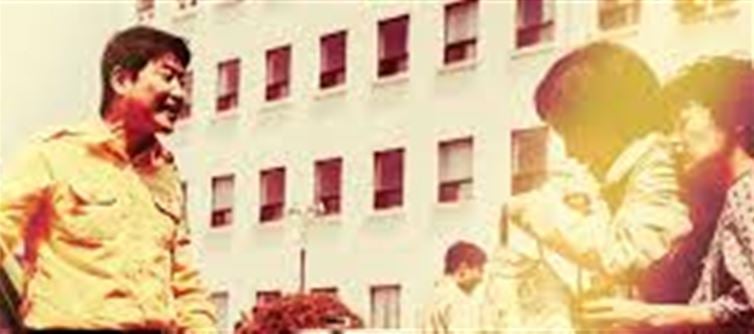

The South Korean film A Taxi Driver (2017), directed by Jang Hoon, is more than just a drama about a working‑class man behind the wheel — it’s a cinematic window into how ordinary individuals become part of a larger political struggle, and how cinema can bring those struggles alive for audiences around the world.
Story Synopsis: From Taxi to Protest
At its heart, A Taxi Driver follows Kim Man‑seob, a widowed taxi driver from Seoul who takes on a fare without knowing its true purpose: to drive a German journalist, Peter (Jürgen Hinzpeter), to the city of Gwangju in May 1980. Once there, they find themselves amidst one of the most brutal episodes in modern South Korean history — the Gwangju Uprising, where students and citizens protested against an authoritarian regime.
Initially motivated only by money and survival, Man‑seob is transformed as he witnesses the determination, suffering, and courage of the protestors. What starts as a job becomes a moral awakening, pulling a simple taxi driver into the political reality of a nation struggling for democracy.
The Film’s Political Context
The Gwangju Uprising — a nationwide symbol of resistance — was heavily censored by the government at the time, leaving little accurate information available. The real German journalist’s footage played a crucial role in exposing the truth internationally. A Taxi Driver dramatizes this history while grounding it in the eyes of an ordinary man who had no political stakes at the beginning of his journey.
This dual perspective — the common man’s personal story alongside a mass political struggle — is what makes the narrative powerful. Man‑seob’s evolution mirrors how individuals, even without political ambitions, can become part of something much larger when confronted with injustice.
Ordinary Human, Extraordinary Circumstances
The protagonist’s transformation is central to the film’s emotional impact. Early on, he’s burdened by day‑to‑day struggles: debt, parenting, and making ends meet. However, as he is drawn deeper into the protests and sees the brutality meted out on citizens, his priorities shift from survival to solidarity with the people risking everything for democracy. This reflects a common theme in politically charged cinema: the power of shared experience to politicize the previously apolitical.
The struggle of the citizens in Gwangju — students, taxi drivers, and ordinary residents — underscores how collective action against oppressive politics often starts with everyday people. By framing these events through a taxi driver’s eyes, the film makes the political intimate and personal.
Cinema as Political Memory and Education
A Taxi Driver* occupies an important place in cinema because it brings an intense political moment to a broad audience. While films about historical protests risk either oversimplifying events or alienating viewers, this movie uses character‑driven storytelling to create empathy and engagement.
By depicting the intersection of personal life and political upheaval, the film reinforces how cinema can:
Educate audiences about real historical struggles.
Humanize political events through relatable protagonists.
Inspire discussion about the roles of common people in shaping politics.
This blending of individual narrative with collective struggle makes A Taxi Driver not just entertainment, but a reminder of how cinema can preserve political memory and social conscience.
Conclusion: Ordinary Lives in Extraordinary Times
Ultimately, A Taxi Driver highlights the intersection of ordinary life and political resistance. By following a taxi driver who becomes an unwitting witness — and later an unlikely participant — in a historic protest movement, the film underscores how political struggle isn’t just fought by leaders or activists, but by everyday people responding to injustice.
In bringing this story to global audiences, the movie also underscores cinema’s power to connect personal stories with larger historical and political truths.
Disclaimer:
The views and opinions expressed in this article are those of the author and do not necessarily reflect the official policy or position of any agency, organization, employer, or company. All information provided is for general informational purposes only. While every effort has been made to ensure accuracy, we make no representations or warranties of any kind, express or implied, about the completeness, reliability, or suitability of the information contained herein. Readers are advised to verify facts and seek professional advice where necessary. Any reliance placed on such information is strictly at the reader’s own risk.
 click and follow Indiaherald WhatsApp channel