


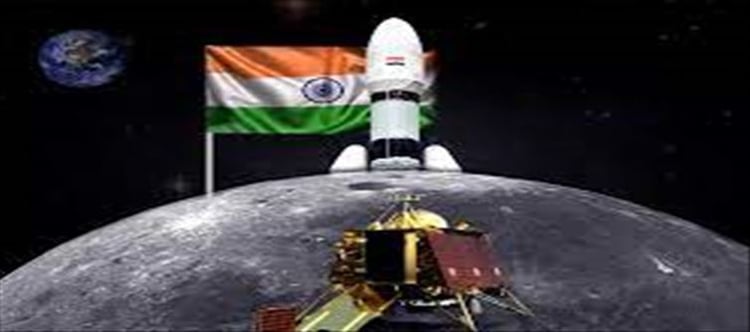

India’s first space-based sun mission Aditya-L1 is set to be launched on september 2. Ever since the indian Space
Research Organization (ISRO) announced the date and time of the Aditya-L1 launch, the curiosity of the general
public along with those interested in space science is gaining momentum. One of the reasons for this is the recent
'Chandrayaan-3' safe and successful soft-landing on the Moon, which has made indian scientists proud all over the
world and has achieved an unprecedented achievement in the name of the country, because before this no country
has been able to land on the Moon. After the success of Chandrayaan-3, there is a lot of excitement and enthusiasm
about Aditya-L1, while the expectations regarding this mission have also increased a lot. This spacecraft will go
15 lakh kilometers away from the earth. From the launch point of Aditya-L1 to its destination Lagrange-1 (L1), let
us understand its route.
From where will Aditya-L1 be launched?
The satish dhawan Space Center at Sriharikot in andhra pradesh is known as 'Spaceport'. India's space missions
are launched from here. Like Chandrayaan-3, Aditya-L1 will also be launched from the satish dhawan Space
Center in Sriharikota on september 2 at 11.50 am. Polar Satellite Vehicle (PSLV-C57) will be used to launch it.
How far will Aditya-L1 go?
According to isro, Aditya-L1 will be placed in a halo orbit around 'Lagrange' point 1. This place is at a distance
of 1.5 million kilometers (1.5 million kilometers) from the Earth. The meaning of Lagrange point 1 is L1, which is
also associated with the name of this spacecraft. These points are named after the scientist Joseph Louis Lagrange.
There are five Lagrange points (L1, L2, L3, L4, L5) in the system of sun, Earth and Moon. The gravity of the Sun-
Earth does not affect these points. Once something is sent to this place in space, it can be kept there for a long
time. The L1 point is said to be the most suitable for studying the sun by keeping an unobstructed gaze at it all the
time. That's why isro is sending it on L1.
 click and follow Indiaherald WhatsApp channel