


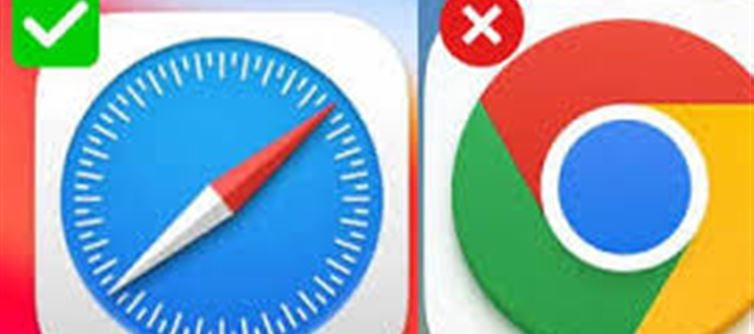

New Delhi: In a recent development, Apple has issued a warning to iphone users, urging them to limit or stop using google Chrome on their devices. According to apple, Safari offers stronger privacy protections than third-party browsers like Chrome.
This warning comes amid growing concerns over data privacy, tracking, and online security in mobile browsing.
Apple’s Warning Explained
- Key Message from Apple:
- “Unlike Chrome, Safari truly helps protect your privacy.”
- Apple emphasizes that Safari blocks cross-site tracking, fingerprinting, and other forms of online surveillance more effectively than Chrome.
- Reason for Concern:
- Google Chrome is known to collect user data for personalized ads and analytics.
- Apple positions Safari as a privacy-first browser, highlighting features such as:
Why iphone Users Should Take Note
Data Privacy Risks:
Using Chrome on iOS may expose users to more aggressive tracking and profiling by Google.
Personal information such as search history, location, and browsing habits could be monetized for advertising purposes.
Security Features:
Safari integrates Apple’s security ecosystem, providing stronger encryption and fraud protection on iPhones and iPads.
Chrome, while popular, relies on Google’s data collection model, which may conflict with Apple’s privacy standards.
Performance on iOS:
Apple notes that Safari is better optimized for iOS, consuming less battery and memory compared to Chrome.
Users may also notice faster page loads and smoother integration with Apple’s ecosystem.
Apple’s Privacy-First Approach
Apple has consistently positioned itself as a guardian of user privacy, introducing features like:
- App Tracking Transparency (ATT): Gives users control over which apps can track their activity.
- Mail Privacy Protection: Hides IP addresses and prevents senders from knowing if emails are opened.
- Secure Safari Updates: Regular updates that patch vulnerabilities and block trackers.
Conclusion
Apple’s warning is a reminder that browser choice impacts privacy and security. While google Chrome is widely used and convenient, Safari on iPhones provides enhanced privacy protections, better integration with iOS, and more secure browsing.
iPhone users concerned about data privacy, tracking, and device security may want to switch to Safari or at least use Chrome selectively for non-sensitive browsing.
Disclaimer:
The views and opinions expressed in this article are those of the author and do not necessarily reflect the official policy or position of any agency, organization, employer, or company. All information provided is for general informational purposes only. While every effort has been made to ensure accuracy, we make no representations or warranties of any kind, express or implied, about the completeness, reliability, or suitability of the information contained herein. Readers are advised to verify facts and seek professional advice where necessary. Any reliance placed on such information is strictly at the reader’s own risk..jpg)
 click and follow Indiaherald WhatsApp channel