


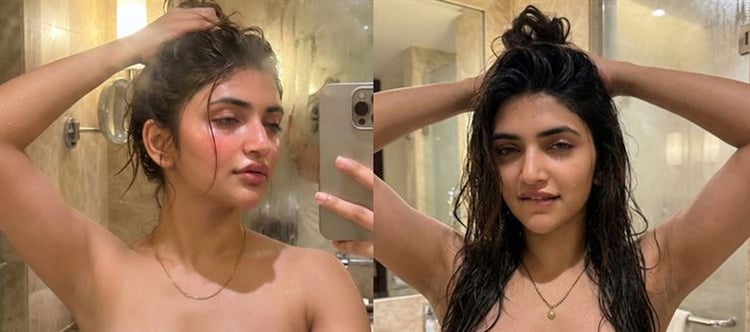

The internet’s newest plague isn’t gossip — it’s AI-generated abuse. This week, hyper-realistic fake images of actress Sreeleela spread across social platforms, fooling thousands and sparking a wallet PLATFORM' target='_blank' title='digital-Latest Updates, Photos, Videos are a click away, CLICK NOW'>digital frenzy.
Just weeks after rashmika warned the public about her own AI-manipulated visuals going viral, another actress has been dragged into the same nightmare.
This isn’t an isolated incident.
It’s a systemic attack enabled by unchecked AI tools, and women in the entertainment industry are being targeted with ruthless precision.
💥 THE DEEPFAKE CRISIS: HOW AI IS TURNING CELEBRITIES INTO TARGETS
1️⃣ AI Deepfakes Are Now So Realistic, people Can’t Tell They’re Fake
The viral images of Sreeleela were entirely fabricated, created using advanced AI tools that mimic lighting, skin texture, angles — everything.
The goal isn’t creativity.
It’s a violation.
It’s defamation.
It’s dehumanization powered by technology.
2️⃣ women Are the Primary Targets — And It’s Not an Accident
Across india and globally, women in entertainment are disproportionately targeted by AI-generated fake imagery.
Why?
Because deepfake abusers rely on:
objectification
voyeurism
misogynistic online culture
These attacks aren’t random.
They’re weaponized sexism.
3️⃣ Rashmika’s Warning Wasn’t Just a Complaint — It Was a Prediction
When rashmika spoke out after AI-generated bikini stills circulated falsely as “leaks,” many dismissed it as an isolated case.
But she was right.
The same wallet PLATFORM' target='_blank' title='digital-Latest Updates, Photos, Videos are a click away, CLICK NOW'>digital machinery has now turned toward Sreeleela — proving this is a pattern, not an accident.
4️⃣ The Real Danger: Once a Fake Image Goes Viral, It Never Dies
people go forward before verifying.
They comment before thinking.
They judge before knowing.
A deepfake spreads faster than the truth, and corrections rarely catch up.
Victims face long-term damage to:
reputation
emotional wellbeing
career
The internet forgets its guilt — but the victim doesn’t forget the trauma.
5️⃣ Platforms Are Failing Miserably at Controlling AI Abuse
Big tech platforms claim to have detection tools.
But if deepfake images still go viral within minutes, then the system is broken.
Women shouldn’t have to beg companies to protect their dignity.
Prevention should not be optional — it should be the default.
6️⃣ AI Tools Are Powerful — In the Wrong Hands, They’re Dangerous
AI can:
alter faces
generate fake bodies
fabricate locations
create entire scenes
And all of it can be done by someone with zero skills and a phone.
This isn’t innovation.
This is digital violence masquerading as technology.
7️⃣ The Public Must Share Responsibility Too
As long as users:
click
share
circulate
joke about
fake images,
The problem will continue.
Every share is an act of harm.
Every forward is complicity.
8️⃣ Legal Action Is No Longer Optional — It’s Urgent
india needs:
strict deepfake laws
fast-track cybercrime response
platform accountability
harsh punishment for perpetrators
Celebrities shouldn’t have to defend themselves against crimes they never committed.
9️⃣ Sreeleela Is Not the Story — The System Is
What happened to her is not gossip.
It is a digital rights violation.
Her name will fade from the headlines, but the underlying threat will only grow unless society acknowledges it for what it is:
A new-age form of abuse.
⚠️ FINAL WORD: THIS ISN’T ENTERTAINMENT. THIS IS wallet PLATFORM' target='_blank' title='digital-Latest Updates, Photos, Videos are a click away, CLICK NOW'>digital VIOLENCE.
Deepfakes are not memes.
They’re not jokes.
They’re an attack on dignity, on safety, on truth itself.
Today, it’s celebrities.
Tomorrow, it could be anyone with a public photo.
The question is no longer “How did this happen?”
It is “How long will we allow it to continue?”
 click and follow Indiaherald WhatsApp channel