


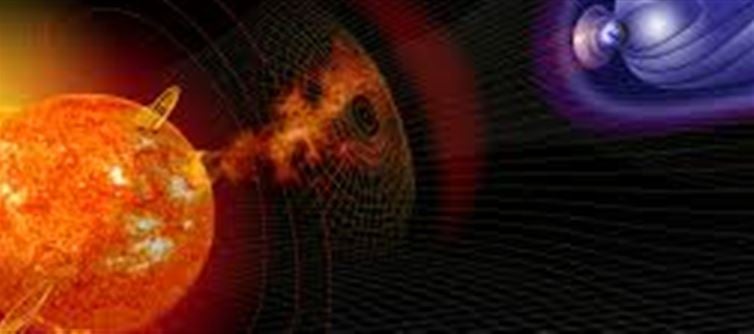

Scientists say Earth is currently experiencing a solar proton storm, with energetic protons streaming toward the planet after a strong eruption on the Sun. This kind of space weather event is unusual and, according to real‑time monitoring sites, is among the most intense proton storms seen since at least 1991.
Solar proton storms happen when the sun releases high amounts of electrically charged particles — especially protons — during powerful solar activity such as flares and coronal mass ejections (CMEs). These particles can travel straight along magnetic field lines toward Earth.
Officials have also noted a severe radiation storm rating (S4) currently in progress, indicating high levels of energetic particles reaching near‑Earth space. These are rare and were last observed to this degree during strong solar activity in previous cycles.
How This Compares to Past Events
- The 1991 solar proton event — often referenced in space weather records — was one of the strongest in recent decades and serves as a benchmark for high proton flux events. Current measurements suggest this storm is comparable to or exceeding that level in some metrics.
- While other intense space weather events have occurred (like geomagnetic storms in 2003 or severe flare episodes), strong proton storms of this scale are uncommon.
What the Effects Can Be
A strong solar proton storm doesn’t physically harm people on the ground but can influence technology and safety in specific ways:
🚀 Satellites and Spacecraft
- Increased radiation can interfere with satellite electronics and sensors
- Space agencies monitor spacecraft closely to avoid anomalies
✈ Aviation
- High‑latitude flights may face increased radiation doses for crew and passengers
- Some polar routes could need adjustments depending on storm strength
📡 Communications & Navigation
- Radio signals, especially high‑frequency (HF), can become disrupted
- GPS accuracy may fluctuate during intense particle influx
🌌 Auroras
- Energetic particles often produce spectacular auroras — sometimes visible farther from the poles than usual.
⚠️ Human Health
- Astronauts and high‑altitude crews are most vulnerable to radiation exposure; general public exposure at ground level remains negligible.
Why It’s Significant
Solar storms are part of normal solar cycle activity — the sun goes through roughly 11‑year cycles of quieter and more active phases. However, intense proton storms like this are relatively rare and serve as reminders of the Sun’s powerful influence on near‑Earth space.
Space weather agencies around the world continue to monitor the situation and issue updates to stakeholders in aviation, satellite operations, and power grid management as needed.
Disclaimer:
The views and opinions expressed in this article are those of the author and do not necessarily reflect the official policy or position of any agency, organization, employer, or company. All information provided is for general informational purposes only. While every effort has been made to ensure accuracy, we make no representations or warranties of any kind, express or implied, about the completeness, reliability, or suitability of the information contained herein. Readers are advised to verify facts and seek professional advice where necessary. Any reliance placed on such information is strictly at the reader’s own risk.
 click and follow Indiaherald WhatsApp channel