


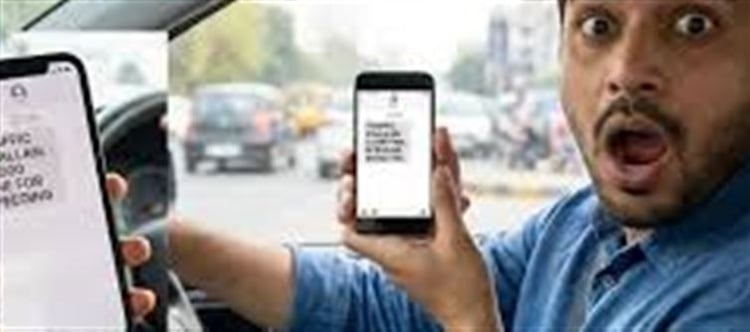

Scammers have stepped up their game — using fake traffic fine notices to trick drivers into paying money or revealing bank details. Here’s how this scheme works and how you can stay safe.
1. 📱 “Urgent Fine! Pay Now!” — The Scam That Preys on Panic
Fraudsters send SMS, whatsapp messages, or emails claiming you have unpaid traffic fines and your licence or vehicle will be blocked unless you pay immediately. These messages often look very official, using government logos and urgent language to push you into acting without thinking.
2. 🖥️ Fake Payment Pages Masquerading as Official Sites
Once you click the link in the message, you’re taken to a fraudulent website designed to look like official portals (e.g., Parivahan e‑challan). These sites collect your banking/card details or prompt payments — but it isn’t a real government page.
3. 💸 Real Money Lost — Small Fine, Big Theft
Scammers often mention a small fine amount (like ₹500) to make it seem believable — but behind the scenes, victims have reported huge unauthorised deductions after filling in card details. In one recent case, an elderly man lost nearly ₹2.5 lakh after trying to “pay” a fake fine.
4. 🕵️♂️ Clever Psychological Tactics
Scam messages use tricks to build credibility:
- Threats of license suspension or legal action
- Urgency (“pay within 24 hrs!”)
- Fake challan numbers and vehicle details
- Fake sites with government branding
These techniques increase the chance that drivers will act impulsively.
5. 📲 Beyond SMS — whatsapp & PDF Traps
It isn’t just SMS. Scammers also send WhatsApp messages, voice notes, clickable PDFs, and even fake app download links claiming to help “view evidence” or “check fine details.” Downloading these can expose your device to malware.
6. 🔎 How to Spot a Fake Traffic Fine Notice
Watch out for these red flags:
✔ Sender is a normal mobile number, not an official govt ID
✔ Link doesn’t lead to a .gov.in domain
✔ Message pressures you to pay immediately
✔ You are asked for full card details/OTP/CVV
✔ Fine details don’t match official records when you check manually
7. 🛡️ How to Protect Yourself
Here’s what to do instead of clicking suspicious links:
✅ Always check traffic fines on official portals like Parivahan.gov.in directly
✅ Don’t click links in unexpected or unfamiliar messages
✅ Never share OTPs or banking credentials with unknown sources
✅ Report suspicious messages to cybercrime authorities and your bank
8. 📣 Spread the Word — Protect Friends & Family
Scammers often target elderly and less tech‑savvy users who take these alerts at face value. Make sure grandparents, parents, and friends know that real fines won’t be sent with threatening links and requests for bank details.
Bottom Line:
This isn’t just a random annoyance — it’s a serious cyber fraud that can drain bank accounts and compromise personal data. Stay alert, check fines only through official channels, and never rush into payments based on unexpected messages. 🚗💡
Disclaimer:
The views and opinions expressed in this article are those of the author and do not necessarily reflect the official policy or position of any agency, organization, employer, or company. All information provided is for general informational purposes only. While every effort has been made to ensure accuracy, we make no representations or warranties of any kind, express or implied, about the completeness, reliability, or suitability of the information contained herein. Readers are advised to verify facts and seek professional advice where necessary. Any reliance placed on such information is strictly at the reader’s own risk.
 click and follow Indiaherald WhatsApp channel