


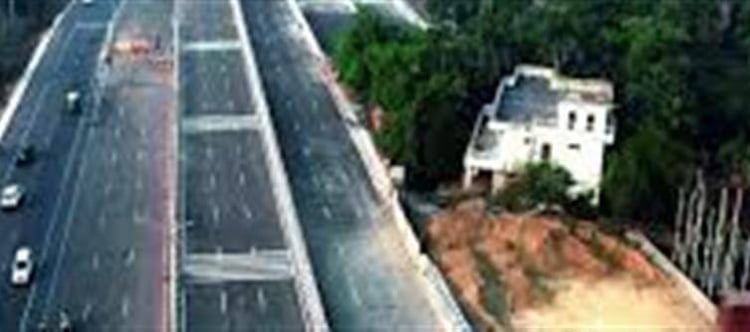

The Delhi–Dehradun Expressway (also called the Delhi–Dehradun Economic Corridor) is a major infrastructure project aimed at enhancing road connectivity between Delhi and Dehradun (Uttarakhand, India) along with several key intermediate urban and rural regions. Once fully operational, the expressway is expected to cut travel time from over six hours to around 2.5 hours for the roughly 210–213 km long route.
📍 Location and Alignment
- The expressway starts from Delhi and passes through key towns and districts in Uttar Pradesh — including Baghpat, Shamli and saharanpur — before entering Uttarakhand and ending at Dehradun.
- A critical part of the route is the last ~20 km section between Ganeshpur and Dehradun, where the alignment transitions from plain to foothill terrain.
🌉 12‑Kilometer Elevated Road: Ganeshpur to Dehradun
🚧 Why an Elevated Section?
The section from Ganeshpur to Dehradun incorporates approximately 12 km of elevated roadway above the existing terrain for several reasons:
- To minimise disturbance to the ground and local ecology, especially where the corridor crosses floodplains, riverbeds, or sensitive landscapes.
- To preserve wildlife habitats and improve safety by separating fast‑moving vehicles from animals in the region.
- To ensure a smoother and uninterrupted driving experience in an area that otherwise involves forests, undulating terrain, and narrower ground access roads.
🐘 Wildlife Protection and Eco‑Integration
This elevated stretch is part of conservation‑focused design:
- It forms Asia’s longest elevated wildlife corridor (about 12 km) that allows animals to move freely beneath the expressway, especially through forest edges near Rajaji National Park.
- The design includes multiple underpasses, specially engineered elephant and animal underpasses, and eco‑friendly features such as wildlife‑friendly lighting and noise‑reducing barriers to reduce both noise and light pollution.
🛠️ Engineering and Construction Features
In addition to the elevated road segment:
- There are multiple bridges and underpasses (including major and minor bridges, as well as vehicle underpasses) built to ensure safe and seamless connectivity for both wildlife and commuters.
- The expressway includes tunnels (e.g., near Daat Kali) to bypass hilly or difficult terrain sections with minimum environmental impact.
- Modern amenities such as wayside facilities, rainwater harvesting, and other traveler facilities are part of the broader project.
🚘 Travel Time and Connectivity Benefits
Once fully open:
- The expressway will elevate connectivity between Delhi and Dehradun, making road travel competitive with air travel due to drastic reductions in total travel time.
- It is expected to benefit tourism, logistics and regional economic development across the states it traverses.
📅 Current Status and Timeline
- Large stretches, including parts of the elevated section, have already seen trial runs and partial operations as of late 2025 and early 2026.
- The full commissioning of the expressway has experienced revised deadlines due to construction delays, with high‑level expectations for opening by early 2026.
🌱 Environmental and Social Considerations
Construction of this corridor, especially the Ganeshpur–Dehradun segment, has led to debates and concerns regarding tree cutting and wildlife impact:
- Thousands of trees were felled along portions of the expressway, prompting commitments to replanting and ecological safeguards.
- Comprehensive planning (such as site studies and Wildlife Institute of india involvement) guided the elevated section to balance infrastructure with ecological sensitivity.
🧭 Conclusion
The 12‑km elevated road between Ganeshpur and Dehradun is a defining element of the Delhi–Dehradun Expressway, engineered to enhance speed, safety and wildlife protection. Serving as a key infrastructural and ecological innovation, it embodies modern transport planning in india — combining rapid mobility with environmental considerations.
Disclaimer:
The views and opinions expressed in this article are those of the author and do not necessarily reflect the official policy or position of any agency, organization, employer, or company. All information provided is for general informational purposes only. While every effort has been made to ensure accuracy, we make no representations or warranties of any kind, express or implied, about the completeness, reliability, or suitability of the information contained herein. Readers are advised to verify facts and seek professional advice where necessary. Any reliance placed on such information is strictly at the reader’s own risk.
 click and follow Indiaherald WhatsApp channel