


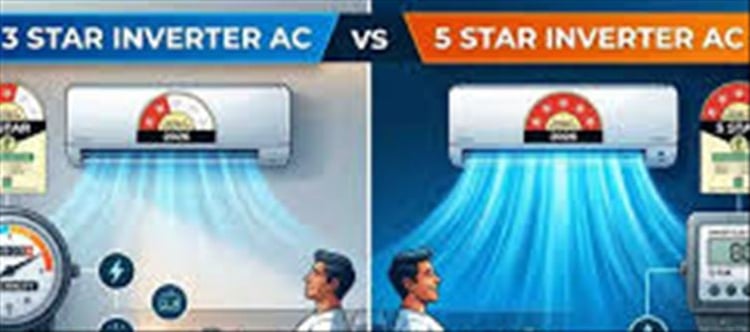

📢 Quick Answer
👉 If you want low price, choose 3-star AC
👉 If you want lower electricity bills, choose 5-star AC
But the right choice depends on how many hours you use AC daily.
⭐ What does “Star Rating” mean?
Star rating is given by the Bureau of Energy Efficiency (BEE) under:
Bureau of Energy Efficiency
It shows how much electricity an AC consumes:
- ⭐⭐⭐ 3-Star = Moderate efficiency
- ⭐⭐⭐⭐⭐ 5-Star = High efficiency (saves more power)
⚡ 3-Star vs 5-Star AC (Simple Comparison)
Feature
3-Star AC
5-Star AC
💰 Price
Cheaper
Costlier (15–25% more)
⚡ electricity use
Higher
Lower
💵 Monthly bill
Higher
Lower
❄️ Cooling
Same
Same
🧠 Best for
Occasional use
Daily heavy use
👉 Important: Cooling is almost the same. Difference is only in electricity usage.
💡 Electricity Bill Difference (Real Example)
For a 1.5-ton AC (8 hours/day usage):
- ⭐ 3-Star: ~₹2,500/month
- ⭐ 5-Star: ~₹1,700/month
👉 Savings: ₹700–₹1,000 per month
Over 5 years, this becomes a big amount.
🏠 Which AC should YOU buy?
🟡 Choose 3-Star AC if:
- You use AC only 2–5 hours/day
- Budget is tight
- Usage is only for 2–3 months in summer
👉 Best for: guest room, light usage
🟢 Choose 5-Star AC if:
- You use AC 6–10+ hours/day
- You live in very hot areas
- You want long-term electricity savings
👉 Best for: daily bedroom use
🧠 Smart Buying Tip (Most important)
Instead of just star rating, also check:
- ⚙️ Inverter technology (very important)
- 📊 ISEER rating (higher = better efficiency)
- 🧊 Room size matching (1 ton / 1.5 ton)
⚖️ Final Conclusion
👉 3-Star AC = cheaper now, higher electricity cost later
👉 5-Star AC = expensive now, cheaper in long run
✔️ If you use AC regularly → Go for 5-star
✔️ If usage is limited → 3-star is enough
Disclaimer:
The views and opinions expressed in this article are those of the author and do not necessarily reflect the official policy or position of any agency, organization, employer, or company. All information provided is for general informational purposes only. While every effort has been made to ensure accuracy, we make no representations or warranties of any kind, express or implied, about the completeness, reliability, or suitability of the information contained herein. Readers are advised to verify facts and seek professional advice where necessary. Any reliance placed on such information is strictly at the reader’s own risk.
 click and follow Indiaherald WhatsApp channel