


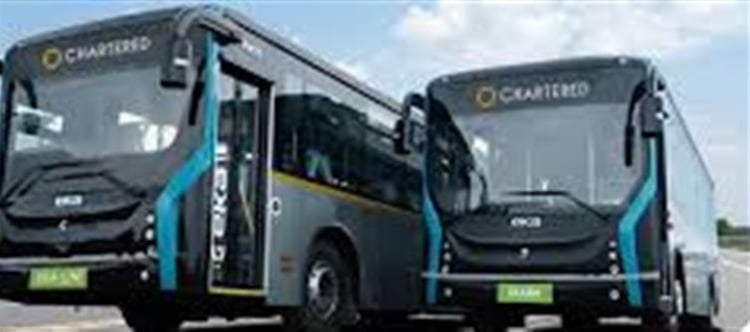

Bengaluru: The city’s public transport network is set for a major transformation with the approval to deploy 1,750 electric buses across its roads, marking a significant step toward sustainable urban mobility in one of India’s busiest metropolitan regions.
The Letter of Confirmation of Quantity (LOCQ) for these buses has been secured by Chartered Speed Limited in partnership with EKA Mobility, under the government of India’s PM E‑Drive Scheme, a programme designed to accelerate the adoption of electric buses in indian cities. This allocation represents nearly 39 % of Bengaluru’s planned induction of 4,500 electric buses under the scheme, highlighting the scale of the planned rollout.
🚍 What This Means for Bengaluru
The addition of 1,750 electric buses — one of the largest single fleet increases so far — is expected to gradually reduce the city’s reliance on diesel‑powered buses, cutting down both noise and air pollution on major commuter routes. While this won’t immediately resolve Bengaluru’s infamous traffic congestion, the shift represents a long‑term commitment to cleaner and quieter public transport.
🔋 Operational Readiness and Challenges
Deploying electric buses at such a scale involves more than just putting vehicles on the road. Operational success will depend on several key infrastructure and training components:
· Charging infrastructure and battery management systems to support daily operations.
· Structured safety protocols and specialised driver training to ensure smooth integration into the existing fleet.
· Preventive maintenance and real‑time monitoring of battery health to maintain reliability.
Chartered Speed and EKA Mobility combine operational expertise with advanced electric vehicle technology to address these complexities and deliver dependable daily service for commuters.
🌱 Bigger Picture: Sustainable Urban Transport
Bengaluru has emerged as a leader among indian cities pushing for electric public transport, reflecting broader sustainability goals at both the state and national levels. The expansion of electric buses aligns with efforts to improve air quality, lower greenhouse gas emissions, and offer more efficient and commuter‑focused mobility solutions for the city’s growing population.
City planners and transport officials say that while traffic challenges will remain, the transition to electric buses marks an important milestone — one that could set a precedent for other metropolitan areas across india working to modernise their transport systems.
Disclaimer:
The views and opinions expressed in this article are those of the author and do not necessarily reflect the official policy or position of any agency, organization, employer, or company. All information provided is for general informational purposes only. While every effort has been made to ensure accuracy, we make no representations or warranties of any kind, express or implied, about the completeness, reliability, or suitability of the information contained herein. Readers are advised to verify facts and seek professional advice where necessary. Any reliance placed on such information is strictly at the reader’s own risk.
 click and follow Indiaherald WhatsApp channel