



India Will Miss the Spectacle, But Here’s Where to Watch
A solar eclipse is one of the most fascinating astronomical events, where the Moon passes between the sun and the Earth, temporarily blocking the Sun’s light. In 2026, a solar eclipse is expected, but it will not be visible from India.
Type of Solar Eclipse
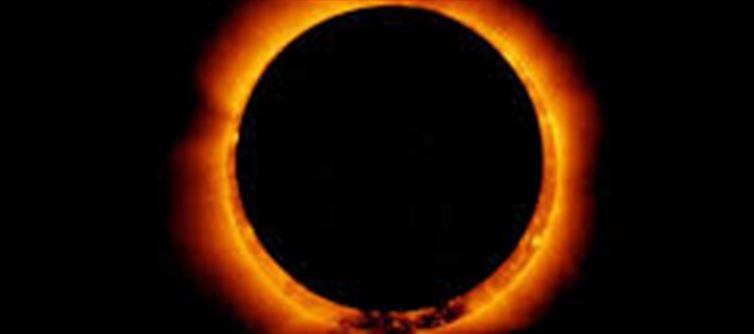
The 2026 solar eclipse will be a annular solar eclipse, also known as a “ring of fire” eclipse. In an annular eclipse, the moon covers the Sun’s center, leaving a bright ring of sunlight visible around the edges.
Where Will It Be Visible?
According to astronomers, the eclipse path will pass over parts of Greenland, Iceland, and Spain, as well as regions in the Arctic. Observers in these areas will witness the maximum annularity, while other nearby regions may see a partial solar eclipse.
- Full annular eclipse visibility: Greenland, Iceland, parts of Spain
- Partial eclipse visibility: Northern Europe, Canada, and parts of Russia
Why india Won’t See the Eclipse
India lies outside the eclipse path, meaning residents will not experience even a partial eclipse. The geometry of the sun, moon, and Earth at the time of the event positions india far from the shadow of the Moon.
Safety Tips for Observers
If you plan to observe the solar eclipse in visible regions:
Never look directly at the Sun without proper eclipse glasses.
Use solar filters on telescopes or binoculars.
Do not use regular sunglasses — they do not provide sufficient protection.
Consider online live streams if you cannot travel to regions of visibility.
Key Timings (Local to the Eclipse Path)
- Start of eclipse: Approx. early morning hours in Greenland/Iceland
- Maximum eclipse (annularity): Mid-morning
- End of eclipse: Late morning
- Exact timings vary depending on the observer’s location along the eclipse path.
Significance of the Event
Even though india won’t witness the eclipse, it is an important astronomical event globally:
- Offers opportunities for scientific observation of the Sun’s corona.
- A chance to study solar dynamics during annularity.
- Popular for astro-tourism in countries along the eclipse path.
Disclaimer:
The views and opinions expressed in this article are those of the author and do not necessarily reflect the official policy or position of any agency, organization, employer, or company. All information provided is for general informational purposes only. While every effort has been made to ensure accuracy, we make no representations or warranties of any kind, express or implied, about the completeness, reliability, or suitability of the information contained herein. Readers are advised to verify facts and seek professional advice where necessary. Any reliance placed on such information is strictly at the reader’s own risk.
 click and follow Indiaherald WhatsApp channel