



India’s government servants, on the other hand, often seem untouchable. Caught taking bribes? Suspended with full pay. Proven incompetent? Transferred to a cushy posting. Real consequences? Seldom. We keep paying salaries to people who treat public service like a personal ATM. So maybe it’s time we borrowed Japan’s idea—and turned the dial up to eleven.
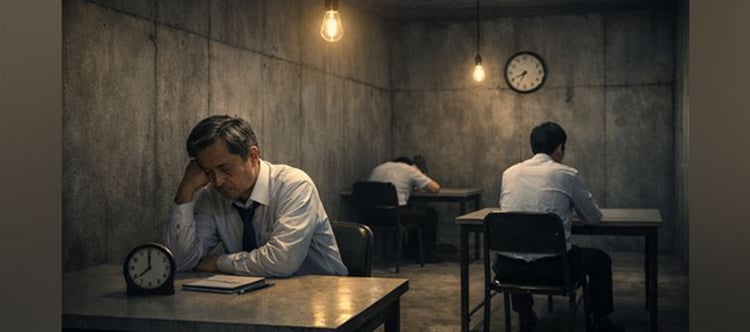
Imagine a 30-storey concrete monolith rising somewhere on the outskirts of every state capital. No windows. No AC. No fans. Just harsh, flickering light from old-school tungsten bulbs that make everything feel hot, yellow, and oppressive. The second you walk through the doors, the air hits you like a wall—stale, heavy, hopeless. mobile jammers blanket the place. No phones work. No laptops allowed. Make the whole building a Faraday cage if you have to. Nothing gets in or out—no calls, no internet, no signals, no escape. This isn’t an office. It’s purgatory with attendance registers.
How It Would Actually Work
Clock In, Sell Your Soul
Every morning, the corrupt or hopelessly incompetent official clocks in like it’s a normal day. Security scans them—no phones, no smartwatches, no nothing. Then they’re marched to their floor. The elevator ride feels like descending into hell. Doors open. Concrete corridors. Fluorescent hum replaced by the low buzz of hot bulbs. They walk into a vast open room filled with rows of desks, each occupied by someone who used to matter. No talking allowed. No reading materials. Just sitting.
Every morning, the corrupt or hopelessly incompetent official clocks in like it’s a normal day. Security scans them—no phones, no smartwatches, no nothing. Then they’re marched to their floor. The elevator ride feels like descending into hell. Doors open. Concrete corridors. Fluorescent hum replaced by the low buzz of hot bulbs. They walk into a vast open room filled with rows of desks, each occupied by someone who used to matter. No talking allowed. No reading materials. Just sitting.
Ten Hours of Absolutely Nothing
No files. No computer. No tasks. You sit. You stare at the wall. The heat builds. The lights bore into your skull. Every minute feels like an hour. You can hear your own breathing—and everyone else’s. Some people crack on day one. Others last a week. But nobody lasts forever.
Lunch Straight from the Nearest Jail
Around noon, prison vans pull up. Whatever slop the inmates are eating that day—runny dal, hard roti, watery sabzi—gets wheeled in on steel trays. Same quality, same quantity. No special orders, no canteen privileges. You eat what convicted criminals eat, because let’s be honest: some of you belong in the building next door.
No Communication, No Hope
Want to call your family? Too bad. Want to scroll X or whatsapp to kill time? Signal’s dead. Want to sneak in earbuds? Metal detectors at the door. The isolation is total. Your world shrinks to four concrete walls and the slow drip of your own sanity.
The Name Everyone Will Whisper in Terror
Officially? The “Special Commission Regarding Education, Welfare, Enlightenment, and Development.”
Unofficially? Everyone will just call it SCREWED. Because that’s exactly what you are the moment you’re assigned there.
The Endgame: Shame or Resignation
Most will quit within months—some within weeks. The pay still comes (gotta follow the rules), but the humiliation? Unbearable. Imagine explaining to your family why you come home every night smelling of sweat and defeat. Imagine knowing your colleagues are whispering about you. The smart ones resign fast. The stubborn ones rot longer. Either way, the system cleans itself.
It’s harsh. It’s brutal. It’s probably the only thing some of these people would actually feel. japan showed the world that boredom and shame can be more powerful than any punishment. india just needs to make it hurt a little more. Because right now? Too many corrupt babus are laughing all the way to the bank—on our money. Maybe it’s time they sat in the dark instead.
 click and follow Indiaherald WhatsApp channel