


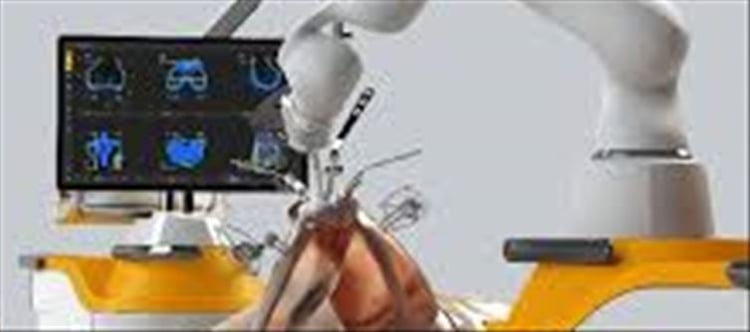

Robotic joint replacement is an advanced surgical technique used mainly for knee and hip replacement procedures, where surgeons use robotic-assisted systems to improve accuracy, implant positioning, and long-term outcomes.
It doesn’t mean a robot performs surgery alone—instead, a surgeon controls a robotic system that acts like a high-precision surgical assistant.
🤖 What Is Robotic Joint Replacement?
Robotic joint replacement uses computer-guided 3D planning and robotic arms to help surgeons:
Map the joint in 3D before surgery
Plan exact bone cuts and implant placement
Execute surgery with millimeter-level precision
Preserve healthy bone and soft tissue
Common systems include platforms like Mako (Stryker) and ROSA (Zimmer Biomet).
🎯 Precision: The Biggest Advantage
Traditional joint replacement relies heavily on manual alignment. Robotic systems improve this by:
📏 1. Better alignment accuracy
Implants are positioned with higher geometric precision
Reduces risk of misalignment over time
🦴 2. Personalized surgical planning
Each patient gets a custom 3D joint model
Surgery is tailored to individual anatomy, not “standard sizing”
⚖️ 3. Balanced soft tissue handling
Helps maintain natural ligament balance in the knee
Reduces post-surgical stiffness or uneven wear
🚀 Innovation in Surgery
Robotic joint replacement represents a major shift in orthopedic care:
🧠 AI + imaging integration
CT or MRI scans create a wallet PLATFORM' target='_blank' title='digital-Latest Updates, Photos, Videos are a click away, CLICK NOW'>digital replica of the joint
Software simulates surgery before it happens
🦾 Robotic guidance systems
The robot limits unnecessary bone cutting
Provides real-time feedback during surgery
🔄 Data-driven outcomes
Systems continuously learn from surgical data
Improves accuracy over time across hospitals
🏃 Faster Recovery: Why Patients Heal Quicker
Robotic-assisted procedures often support faster recovery because:
🩸 1. Less tissue damage
Smaller incisions and more controlled movements
Reduced trauma to surrounding muscles
🦴 2. Better implant fit
More natural joint movement after surgery
Less post-operative pain in many cases
🏥 3. Early mobility
Patients often begin walking sooner (sometimes within 24 hours)
Shorter hospital stays compared to traditional surgery
📊 Robotic vs Traditional Joint Replacement
Feature
Robotic Surgery
Traditional Surgery
Precision
Very high (3D guided)
Surgeon-dependent
Bone removal
Minimal & controlled
Manual
Recovery time
Often faster
Moderate
Pain levels
Usually reduced
Varies
Implant alignment
Highly accurate
Slight variation possible
⚠️ Limitations to Understand
Robotic joint replacement is advanced, but not perfect:
💰 Higher cost than traditional surgery
🏥 Requires specialized hospitals and trained surgeons
🦾 Not always necessary for all patients
📊 Long-term superiority still being studied in some cases
🧠 Final Takeaway
Robotic joint replacement is best described as:
A surgeon-led, robot-assisted system that improves precision, personalization, and consistency in hip and knee replacement surgery, often leading to smoother recovery and better joint alignment.
It represents a shift toward data-driven orthopedic surgery, where accuracy and planning matter as much as surgical skill.
Disclaimer:
The views and opinions expressed in this article are those of the author and do not necessarily reflect the official policy or position of any agency, organization, employer, or company. All information provided is for general informational purposes only. While every effort has been made to ensure accuracy, we make no representations or warranties of any kind, express or implied, about the completeness, reliability, or suitability of the information contained herein. Readers are advised to verify facts and seek professional advice where necessary. Any reliance placed on such information is strictly at the reader’s own risk.
 click and follow Indiaherald WhatsApp channel