


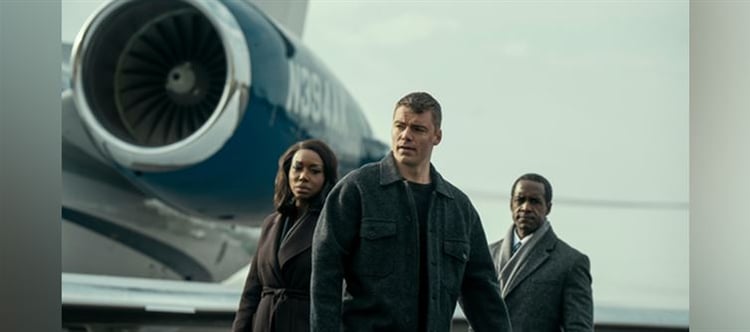

🔥 ‘The Night Agent’ Season 3 Review: Leaner, Meaner, and Finally Firing on All Cylinders
When The Night Agent first landed in 2023, it didn’t scream prestige television. It didn’t need to. What it delivered was sharp, muscular, binge-ready espionage — the kind that feels ripped from an airport paperback but executed with streaming-era urgency. Season 1 was a breakout. Season 2 was ambitious but bloated. Season 3? This is the correction. This is the glow-up. This is the show finally mastering its own identity.
And it’s easily the strongest run yet.
Story: A Conspiracy That Actually Feels Dangerous
Season 3 finds Peter Sutherland still walking the razor’s edge as a double agent, waiting for intelligence broker Jacob Monroe to make his move. What begins as a straightforward assignment — track down FinCEN employee Jay Batra, accused of killing his superior after uncovering classified intel — quickly spirals into something much darker. Istanbul becomes ground zero for a conspiracy involving shadow money, political leverage, and assassins who don’t miss.
What makes this season click is focus. Unlike the globe-trotting sprawl of Season 2, the storytelling here is disciplined. Each reveal builds. Each twist lands with intention. The threads — Peter’s covert maneuvering, journalist Isabel De Leon’s investigation, and Chelsea Arrington’s suspicions inside the white house — tighten rather than tangle.
Back in Washington, Chelsea senses fractures within President richard Hagen’s administration that don’t match the polished public image. Given the election manipulation fallout from Season 2, you expect corruption from predictable corners. The show smartly subverts that instinct. When Peter’s fieldwork and Chelsea’s instincts finally collide, it’s not just satisfying — it’s earned.
This season understands escalation.
Performances: Gabriel Basso Owns the Franchise
If there were any lingering doubts, Season 3 confirms that Gabriel Basso is the engine driving this machine. His Peter is no longer just the earnest agent answering a mysterious phone. He’s bruised, conflicted, and visibly carrying the weight of past betrayals.
The physicality stands out. Basso’s commitment to stunt work pays off in a jaw-dropping car chase that ends in an underwater fistfight — a sequence that feels cinematic in scope and execution. But what elevates it is vulnerability. This season lets Peter get wrecked. He bleeds. He falters. He survives by inches. It’s reminiscent of Daniel Craig’s battered Bond or Ethan Hunt barely clawing his way out of chaos.
Opposite him, Genesis Rodriguez is the season’s secret weapon. As Isabel De Leon, she brings bite and emotional intelligence. Her chemistry with Basso is electric because it’s rooted in ideological tension: she believes in exposure; he believes in containment. Their dynamic gives the season its sharpest edge.
Fola Evans-Akingbola’s return as Chelsea Arrington is another win. She brings steadiness and gravitas, grounding the white house subplot with authority and heart. Jennifer Morrison adds nuance as First Lady Jenny Hagen, playing ambition with subtle calculation.
And then there’s Stephen Moyer as “The Father,” a contract killer who is equal parts affectionate parent and ice-cold executioner. His scenes with Peter crackle with menace. You feel the threat before he even moves.
The Rose Question: A Risk That Pays Off
Luciane Buchanan’s Rose was integral to Season 1. But Season 3 makes the smart — and brave — decision to let that chapter close. Rather than force her into a narrative that no longer fits, the show keeps her presence alive as Peter’s moral anchor without dragging the relationship forward artificially.
It clears narrative space. And the ensemble benefits from it.
Technical Craft: Action With Precision, Not Noise
Creator Shawn Ryan and his team rein in the excess. The cinematography is tighter. The pacing is more controlled. Action sequences feel choreographed for impact rather than spectacle alone.
There’s weight to the violence. Silence is used strategically. Even the political dialogue feels sharpened, stripped of fluff. The editing maintains tension without exhausting the viewer — something Season 2 occasionally struggled with.
Most importantly, the show trusts its audience. It doesn’t over-explain. It lets paranoia breathe.
Analysis: Why Season 3 Works
Season 3 succeeds because it understands restraint. It’s not trying to outdo itself with scale. It’s deepening character stakes instead. The conspiracy feels personal. The betrayals cut deeper. The danger feels immediate.
The show also embraces moral ambiguity. There are no clean heroes here — just people navigating compromised systems. That thematic maturity elevates it from a straightforward spy thriller into something more textured.
And yes, it clearly sets up Season 4 — but without sacrificing narrative closure. That balance is rare.
What Works
• Gabriel Basso’s most layered performance yet
• Genesis Rodriguez is a dynamic, scene-stealing addition
• Focused, coherent storytelling after Season 2’s sprawl
• Action sequences that feel cinematic and earned
• Stephen Moyer’s chilling, controlled menace
• Strong white house subplot with real political tension
What Doesn’t
• A few mid-season pacing lulls
• Some supporting characters feel underexplored
• The central conspiracy, while compelling, occasionally leans familiar
Bottom Line
The Night Agent Season 3 is the show at its peak of confidence. By tightening its narrative, sharpening its action, and allowing its lead to fully inhabit the emotional and physical toll of espionage, it delivers its most complete season yet. It’s gripping without being bloated, political without being preachy, and explosive without losing character depth.
If Season 2 wandered, Season 3 locks in.
And it doesn’t miss.
 click and follow Indiaherald WhatsApp channel