


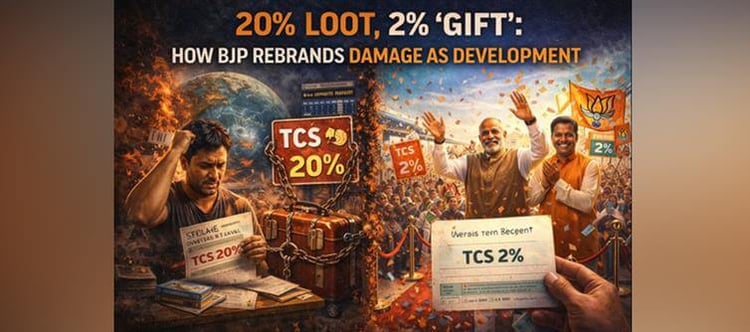

The Bharatiya Janata Party government now claims foreign travel is more affordable, after slashing TCS on overseas tour packages from 5–20% to 2%. Headlines scream “relief.” Supporters cheer “pro-people reform.”
But let’s rewind—because this so-called relief is nothing more than a self-inflicted wound dressed up as generosity. This was the same government that jacked up tcs to a punishing 20%, throttled travel demand, and turned every international trip into a cash-flow nightmare. Now that they’ve quietly reversed it, they want applause.
1. The government Created the Pain—Deliberately.
TCS on foreign travel didn’t accidentally hit 20%. It was a conscious policy choice. The result? Middle-class travellers forced to park huge sums with the tax department, tour operators scrambling, bookings collapsing. That wasn’t reform—it was overreach.
2. This Isn’t Relief. It’s Damage Control.
Reducing tcs to 2% isn’t a benevolent act; it’s an admission that the original policy was excessive. Rolling back a bad decision doesn’t earn praise—it confirms the decision was bad to begin with.
3. PR Can’t Erase the Timeline.
You don’t get credit for setting a house on fire and then throwing a bucket of water. The government introduced the burden, watched the backlash grow, and then performed a partial U-turn—rebranding retreat as leadership.
4. The Middle Class Paid the Price.
For families planning weddings abroad, students travelling for education, or professionals on tours, the 20% tcs was effectively an interest-free loan to the government. Cash-strapped citizens subsidised fiscal experiments—now forgotten in the victory lap.
5. ‘Affordable’ After You Made It Unaffordable?
Calling international travel “more affordable” now is like praising yourself for unlocking a door you locked in the first place. Prices didn’t fall because of innovation; they rose because of policy—and are only easing because that policy failed.
6. Supporters Cheer the Undo Button.
The most disturbing part isn’t the U-turn—it’s the applause. When governance becomes a cycle of harm followed by rollback, and each rollback is sold as a masterstroke, accountability dies.
7. Good Governance Prevents Problems. It Doesn’t Monetise Them.
Real reform doesn’t need dramatic reversals or celebratory press notes. It gets the basics right the first time. What we’re seeing instead is a pattern: impose, observe damage, retreat halfway, claim victory.
Final Word
This isn’t a pro-people gift. It’s a policy correction after avoidable harm. The government dug the pit, filled it back, and now wants a medal for it.
If lowering tcs is good, then raising it to 20% was wrong. And if it was wrong, the people deserve honesty—not headline management.
Governance isn’t about fixing your own mess and calling it reform. It’s about not making the mess in the first place.
 click and follow Indiaherald WhatsApp channel