


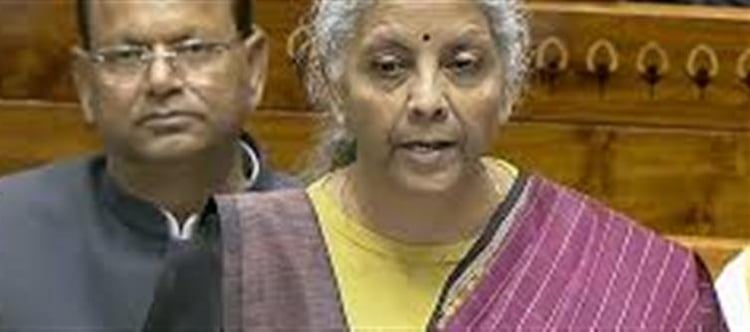

New Delhi: On February 1, 2026, Union Finance minister Nirmala Sitharaman made history by presenting her ninth consecutive Union Budget — a first for any Finance minister in India’s parliamentary history. Her Budget 2026–27 speech in the lok sabha lasted approximately 84–85 minutes, covering key policy priorities, reforms, fiscal measures, and development visions for the coming year.
A Milestone Speech
Sitharaman’s address — delivered from around 11 a.m. to about 12:25 p.m. — clocked in at about 1 hour 25 minutes, making it one of her longest Budget speeches in recent years. While not the longest overall — that distinction goes to her 2020 Budget speech which ran nearly 2 hours 42 minutes — it nonetheless stands out for its substantial content and continuity.
This speech reaffirmed her position as the first finance minister to present nine consecutive Budgets, a tally previously achieved only by seasoned policymakers such as p. chidambaram and closely trailing the record held by morarji desai (ten budgets).
What Was Covered in the Speech
During the 84‑minute Budget presentation, Sitharaman outlined a wide range of proposals and priorities designed to guide India’s economic framework for the fiscal year ahead. Highlights included:
1. Fiscal and Growth Vision
· She framed the Budget around three core themes — accelerating economic growth, building human and industrial capacities, and ensuring equitable access to resources and opportunities.
· The Budget emphasized fiscal prudence while maintaining robust capital expenditure to drive long‑term infrastructure development.
2. Strategic Structural Reforms
· Long‑term reform measures included expansions in manufacturing infrastructure like semiconductors and biopharma, aiming to enhance self‑reliance and global competitiveness.
· Increased focus was placed on modernizing transport connectivity, including high‑speed rail corridors to link major metropolitan and regional centres.
3. Inclusive and Sustainable Policies
· Initiatives to promote skills, entrepreneurship, and new economic opportunities — especially for youth and rural populations — were highlighted.
· Policies were also laid out for education, healthcare, and wallet PLATFORM' target='_blank' title='digital-Latest Updates, Photos, Videos are a click away, CLICK NOW'>digital infrastructure, reflecting a blend of welfare and growth orientation.
Significance of the Ninth Consecutive Budget
Sitharaman’s delivery marks a historic parliamentary milestone — not only for its duration, but for continuity and stewardship over India’s economic direction across nearly a decade. Since taking office in May 2019, she has guided the economy through global uncertainties, including the COVID‑19 pandemic, supply‑chain shocks, and geopolitical volatility, while india continued among the fastest‑growing major economies.
Her 2026 Budget is also noteworthy because it was presented on a Sunday, a departure from tradition aimed at allowing parliament to complete deliberations before the start of the new financial year.
Context Within Budget Speech Records
While her budget presentations have varied in duration over the years, the 2026 speech remains significant:
Year
Duration
Notes
2019
2 hrs 17 min
First Budget
2020
2 hrs 42 min
Longest
2024
~56 min
Shortest in her tenure
2026
~85 min
Historic ninth speech
This pattern shows Sitharaman’s capacity to balance depth and clarity, tailoring speech length to policy complexity and parliamentary context each year.
Market and Political Visibility
The Budget speech — closely watched by markets, industry, and citizens — is a central event in India’s economic calendar. It sets out not just annual spending plans, but longer‑term aspirations for sectors such as technology, manufacturing, rural development, and fiscal architecture.
Economists and business leaders have highlighted the clarity and structure of the 2026 speech as supportive of investor confidence and economic stability over the medium term.
Conclusion
Finance minister Nirmala Sitharaman’s 84‑minute Union Budget speech for 2026–27 was a milestone both in substance and in historical context. It reaffirmed her record‑setting role in indian public finance, conveyed a comprehensive economic vision, and reinforced commitments to growth, fairness, and resilience — all while striking a balance between detailed policy exposition and concise delivery.
Disclaimer:
The views and opinions expressed in this article are those of the author and do not necessarily reflect the official policy or position of any agency, organization, employer, or company. All information provided is for general informational purposes only. While every effort has been made to ensure accuracy, we make no representations or warranties of any kind, express or implied, about the completeness, reliability, or suitability of the information contained herein. Readers are advised to verify facts and seek professional advice where necessary. Any reliance placed on such information is strictly at the reader’s own risk.
 click and follow Indiaherald WhatsApp channel