


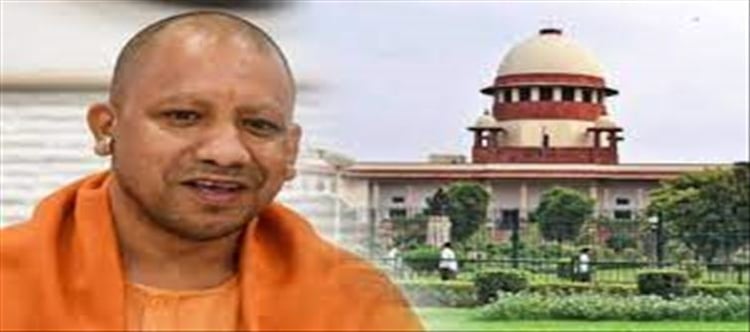

CM got a big relief from the supreme Court...
UP cm yogi adityanath has got a big relief. In 2007, the supreme court refused permission to prosecute him for giving an inflammatory speech. The government said that the evidence in the trial is insufficient. Which was also upheld by the allahabad high court in 2018.
In fact, the petition of the allahabad high court was challenged in the supreme court, in which an independent investigation agency was sought to investigate Yogi's provocative speech, but the high court rejected the petition due to a lack of sufficient evidence. Last year, the state government also refused to prosecute yogi adityanath in this case.
SC had reserved its verdict on august 24
Petitioner Parvez Parwaz said that after the speech of the then mp yogi adityanath, there was a riot in 2007 in Gorakhpur. Many people lost their lives in this. The state CID investigated the FIR registered in the year 2008 in this matter for many years. In 2015, the investigating agency had sought permission from the state government to prosecute Yogi, but the government refused to prosecute him citing insufficient evidence. Now the hearing in this matter is going on in the supreme Court. On august 24, headed by Chief Justice NV Ramana, had reserved the verdict while hearing the matter. At the same time, senior advocate Mukul Rohatgi, appearing for yogi adityanath in this case, said in the supreme court that this matter is being dragged unnecessarily because yogi has now become the Chief Minister.
What was the whole matter?
In fact, communal violence broke out in Gorakhpur, UP on 27 january 2007. In this violence, 2 people were killed, while many people were injured. For this riot, the then mp yogi adityanath (who is now the current Chief Minister), mla Radha Mohan Das Agarwal and the then Mayor of Gorakhpur, Anju Chaudhari, were accused of giving provocative speeches. It was said that due to his provocative speech, a riot broke out in Gorakhpur. A case was registered against these leaders including yogi under sections 153, 153A, 153B, 295, 295B, 147, 143, 395, 436, 435, 302, 427, 452 IPC in this case.
 click and follow Indiaherald WhatsApp channel