


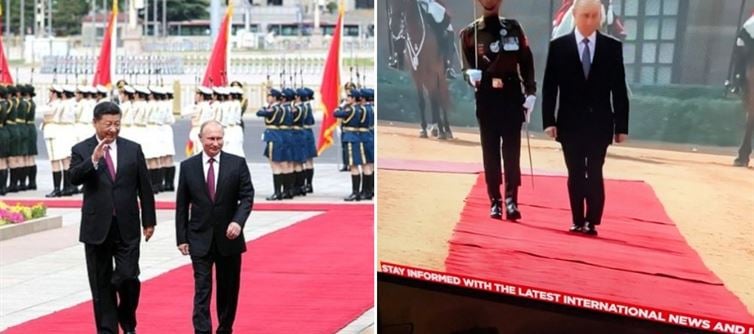

One photo. Two countries. A million bruised egos.
A split-screen comparison of Vladimir Putin’s grand beijing welcome versus his bare-bones delhi arrival has detonated social media — not because of geopolitics, but because of aesthetic violence.
The image has become a referendum on India’s soft power, public design, and chronic inability to stage visual spectacle.
What china treated as theatre, india delivered like paperwork — and the internet went ballistic.
1. The Photo That Slapped india Awake
The viral split-screen didn’t just compare two ceremonies — it compared two civilizational vibes.
Beijing looked like a curated imperial painting. delhi looked like a government notice board.
2. china Gave a Show — india Gave a Stopover
Xi jinping walked Putin through a militarised runway of colour, geometry, and symbolism.
India basically walked him from Point A to Point B like a guest catching a connecting flight.
3. “No Colour, No Culture, No Life” — The Caption That Cut Deep
The post’s savage comment became the anthem of the debate:
A brutal distillation of India’s chronic aesthetic minimalism disguised as tradition.
4. indians Responded With Self-Roast Mode Activated
Comments called the delhi frame “a third-world bus stand”, “a desert wedding mandap”, and “DDA land aesthetics.”
The nation’s humour turned defensive wounds into punchlines — but the sting remained.
5. china Sells Dreams — india Sells Documents
Where china stages every diplomatic moment like a blockbuster, india often treats it like a departmental procedure.
Spectacle vs. functionality — and the photo exposed who invests in which.
6. Blame Game: Colonial Hangover to Bureaucratic Laziness
Some blamed British-era frugality. Others blamed pollution, weather, or the indian bureaucracy’s allergy to beauty.
Most agreed on one thing: India rarely tries to look impressive — even when it should.
7. Context Defenders Fought Back (With Limited Ammo)
A section argued the indian photo showed a simple airport protocol, not a ceremonial parade like Rashtrapati Bhavan events.
But optics don’t wait for context — the internet already delivered its verdict.
8. The Deeper Issue: India’s Public Spaces Lack Drama
From state events to basic infrastructure, india rarely designs for visual impact.
The Putin pic exposed a systemic reality: we build for necessity, not narrative.
9. China’s Grand Aesthetics Are State Policy — India’s Are Accidental
china choreographs nationalism with cinematic precision; every frame is propaganda-ready.
India relies on heritage and improvisation — powerful in spirit, weak in presentation.
10. The Internet’s Final Mic Drop: “This Is The Soft Power Gap”
One post summed up the mood with brutal honesty:
“China sells a dream. india sells reality.”
A compliment for some, an indictment for others — but undeniably true in that image.
 click and follow Indiaherald WhatsApp channel