


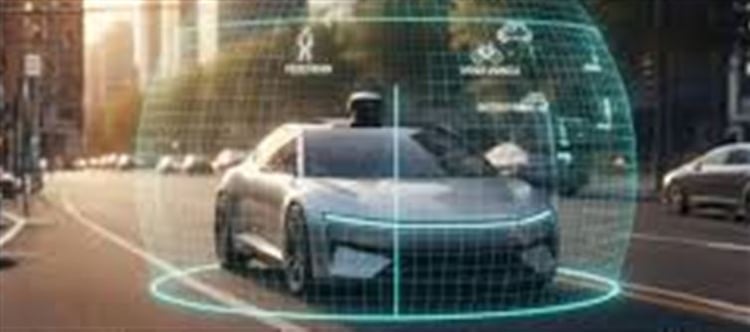

The world of self-driving cars is evolving faster than ever. While today’s autonomous vehicles rely on sensors, cameras, and algorithms to navigate roads, the next frontier is human-like thinking — giving cars the ability to reason, predict, and adapt like a human driver. This shift promises to make autonomous vehicles safer, smarter, and more intuitive on complex roads.
From Rules to Reasoning: The Evolution of Self-Driving Cars
Self-driving cars have gone through several stages of development:
Basic Autonomy
Cars could maintain lanes, detect obstacles, and control speed.
Decisions were rule-based: if sensor sees an object → stop.
Machine Learning and AI
Vehicles learned patterns from huge datasets (like identifying pedestrians or traffic lights).
Improved performance but struggled with unexpected situations (construction zones, aggressive drivers).
Human-Like Thinking (The Next Big Shift)
Cars will begin to reason like humans, predicting the actions of others, handling uncertainty, and adapting strategies in real time.
This is sometimes called cognitive autonomy or situational intelligence in AI research.
What Human-Like Thinking Means for Self-Driving Cars
Human-like thinking involves several advanced capabilities:
1. Predictive Reasoning
- The car can anticipate what other drivers, pedestrians, or cyclists might do.
- Example: Seeing a child near the curb, the car predicts the child may run into the road even if they haven’t moved yet.
2. Context Awareness
- Understanding complex situations such as merging lanes in heavy traffic or navigating around emergency vehicles.
- Unlike rule-based systems, it adapts strategies based on environment and behavior of other road users.
3. Decision-Making Under Uncertainty
- Real roads are unpredictable. Human-like thinking allows cars to weigh risks and make nuanced decisions.
- Example: Choosing between swerving slightly or braking hard when an object appears suddenly.
4. Learning From Experience
- Human-like autonomous vehicles continuously improve from each drive.
- They don’t just follow pre-programmed patterns; they refine responses to rare or complex scenarios.
Technologies Enabling Human-Like Thinking
Several cutting-edge technologies make this possible:
Advanced AI and Neural Networks
Deep learning models can mimic human reasoning by combining perception with decision-making.
Reinforcement Learning
Cars learn optimal actions through simulations or real-world feedback, much like a human learns from trial and error.
Sensor Fusion
Combining data from lidar, radar, cameras, GPS, and ultrasonic sensors creates a richer understanding of the environment.
Digital Twins and Simulation
Virtual environments allow autonomous vehicles to practice thousands of scenarios before encountering them on real roads.
Benefits of Human-Like Thinking in Cars
- Increased Safety: Cars anticipate hazards instead of just reacting.
- Smoother Traffic Flow: Smarter lane merging and overtaking reduce bottlenecks.
- Better Handling of Complex Roads: Urban streets with unpredictable human behavior become manageable.
- Enhanced Passenger Comfort: Less abrupt braking and acceleration for a more human-like ride.
Challenges and Ethical Considerations
Even as human-like thinking promises smarter cars, there are hurdles:
Ethical Decisions
Cars may need to make life-and-death choices in unavoidable accident scenarios.
How should AI prioritize safety in ethical dilemmas?
Transparency
Human-like reasoning is complex; understanding why a car made a certain decision is critical for trust.
Data Privacy and Security
Advanced AI relies on massive data collection. Ensuring this data is secure is essential.
Regulatory Challenges
Laws and insurance frameworks need updates to accommodate cars that make human-like decisions.
When Will We See Human-Like Autonomous Cars?
Experts predict mid to late 2030s for fully human-like thinking self-driving cars to become mainstream, with gradual deployment in:
- Highways (less complex environments first)
- Controlled urban zones
- Ride-sharing fleets for safer city transport
Companies like Tesla, Waymo, and Cruise are investing heavily in AI that mimics human decision-making, signaling that the shift is already underway.
Conclusion
The next big shift in autonomous vehicles is moving from reactive machines to reasoning machines. By mimicking human-like thinking, self-driving cars will navigate uncertainty, predict behaviors, and make ethical and safe decisions — fundamentally transforming mobility.
This evolution promises not just safer roads but a future where cars feel less like machines and more like intelligent companions, understanding the flow of traffic as we do.
Disclaimer:
The views and opinions expressed in this article are those of the author and do not necessarily reflect the official policy or position of any agency, organization, employer, or company. All information provided is for general informational purposes only. While every effort has been made to ensure accuracy, we make no representations or warranties of any kind, express or implied, about the completeness, reliability, or suitability of the information contained herein. Readers are advised to verify facts and seek professional advice where necessary. Any reliance placed on such information is strictly at the reader’s own risk.
 click and follow Indiaherald WhatsApp channel