


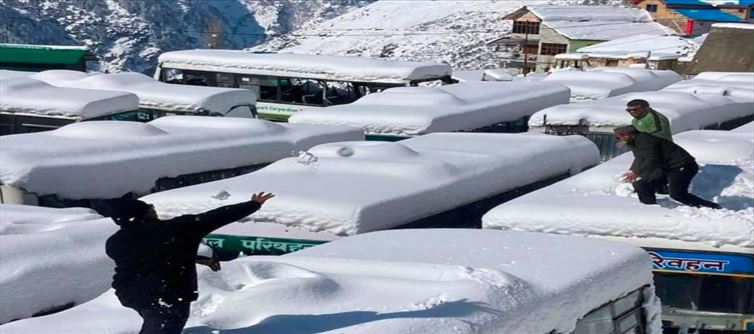

Snowfall predominantly occurs in mountainous areas due to their higher altitude above sea level and the cold climate that persists for most of the year. The elevation plays a significant role, and the low temperatures in these regions contribute to the occurrence of snowfall. Additionally, hilly areas may experience snow in the form of hailstorms. When hailstones descend, they pass through the ozone layer, where the higher temperatures cause them to melt.
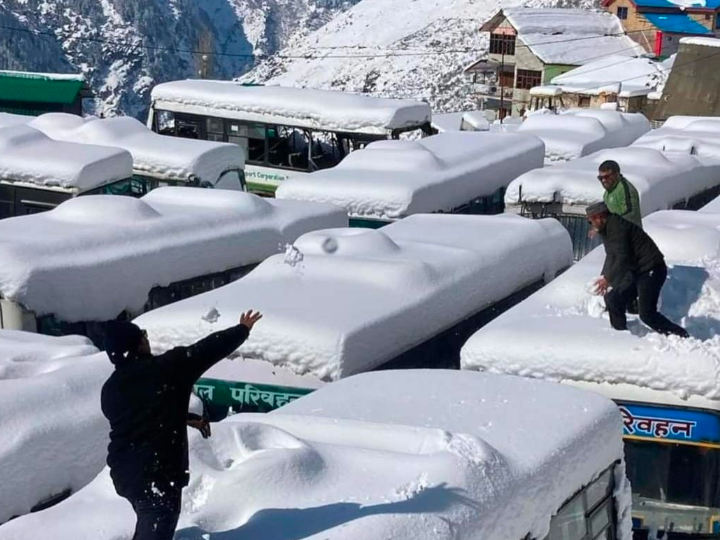
As they continue to fall, they freeze again, resulting in snowflakes in the colder mountainous regions. In contrast, in plains with higher temperatures, melted snow tends to fall as rain rather than snowflakes. The process of snowfall is intricately linked to the atmospheric conditions and moisture content. The evaporation of water from oceans, lakes, rivers, and ponds creates steam, which rises into the atmosphere. As the steam reaches higher altitudes, it cools and forms clouds.
When the temperature drops below freezing point, the steam turns into ice particles, increasing in weight and eventually falling to the ground. The size of the snowflakes can vary during descent, influenced by factors such as wind. Moisture in the atmosphere is crucial for snowfall, and it depends significantly on temperature. For ice to form, the atmospheric temperature must be at or below zero degrees Celsius, known as the freezing point.
Snowstorms are influenced by the presence of moisture, and ground temperatures at or below freezing point contribute to snowfall. However, in specific situations, snow can occur even when ground temperatures are slightly above freezing. The ability of cold air to hold more moisture becomes a determining factor.
Interestingly, extreme cold in dry areas may not lead to snowfall due to limited moisture. For example, Antarctica's Dry Valleys, despite being cold, experience minimal snowfall because of their low moisture content and strong winds that absorb any remaining moisture in the air.
 click and follow Indiaherald WhatsApp channel