


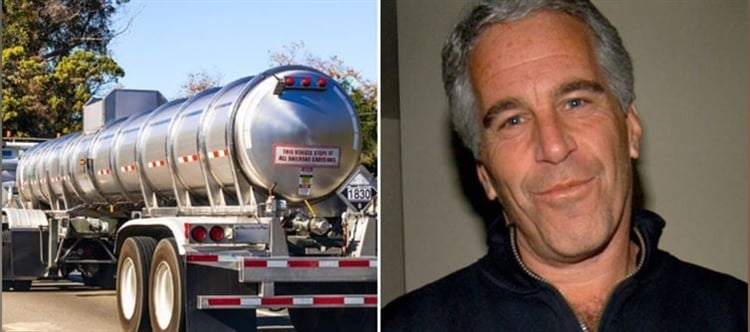

Few names trigger as much scrutiny as Jeffrey Epstein. Every newly surfaced document is dissected, every line item examined. So when recent reporting pointed to a 2018 wire transfer for six 55-gallon drums of sulfuric acid — 330 gallons total — shipped to Little St. James, the internet did what it always does: it leapt to conclusions.
But before speculation outruns evidence, here’s what is actually known — and what remains unproven.
🧾 1. The Document That Sparked the Storm
According to recent media reports citing file releases, a wire transfer dated December 6, 2018, shows payment for sulfuric acid delivered to Epstein’s private island, Little St. James.
That date carries weight because it reportedly aligns with the day the Southern district of New York (SDNY) initiated a renewed federal investigation into Epstein.
The coincidence fuels intrigue.
But coincidence alone does not establish intent.
🧪 2. What Is Sulfuric Acid Normally Used For?
Sulfuric acid is not rare, exotic, or inherently sinister. It’s one of the most widely used industrial chemicals in the world.
On a remote, self-sustaining island like Little St. james, legitimate uses could include:
Water desalination systems (pH adjustment)
Battery maintenance for off-grid solar power systems
Pool maintenance and cleaning
Wastewater treatment systems
General industrial maintenance
In bulk form, it’s commonly transported in large drums — 55 gallons being standard.
Volume alone does not prove criminal use.
🕳 3. The Speculation Spiral
Online discourse quickly veered into darker territory: claims of body disposal, evidence destruction, or concealment.
Here’s the critical point:
There is no confirmed evidence linking the sulfuric acid purchase to criminal disposal activities.
Speculation thrives in high-profile cases. But speculation is not proof.
📅 4. The december 6 Timeline
The timing — the same day as the reported reopening of federal scrutiny — adds dramatic tension.
However:
Federal investigations often unfold quietly before formal filings.
Large shipments require planning and vendor coordination.
Wire transfers can be scheduled in advance.
Without documentary evidence showing reactive intent, the timing remains an unanswered question, not a conclusion.
🌴 5. Island Infrastructure Reality Check
Little St. james was reportedly equipped with:
Power generation systems
Desalination equipment
Pools and luxury infrastructure
Security and maintenance operations
Running a private island requires industrial-grade supplies. Transport costs incentivize bulk purchases.
Again: bulk chemical delivery is consistent with legitimate operations — even if the owner was under scrutiny for unrelated crimes.
⚖️ 6. Why This Matters — Even Without Proof
In cases involving Epstein, transparency gaps fuel distrust.
Because Epstein’s criminal history was so extensive and because investigative failures allowed his network to operate for years, every new document is viewed through a lens of suspicion.
That suspicion is understandable.
But responsible analysis separates:
Documented transactions
Contextual possibilities
Unsupported allegations
The sulfuric acid purchase falls into a gray zone of unanswered questions — not established wrongdoing.
🔍 7. The Evidence Gap
Key unknowns remain:
Who supplied the acid?
What documentation accompanied the shipment?
Were there usage logs on the island?
Did investigators analyze the chemical inventory during later searches?
Until primary documents are independently verified and contextualized by investigators, claims about intent remain speculative.
The Bottom Line
The 330-gallon sulfuric acid purchase is a striking data point.
The date alignment with investigative timelines is intriguing.
But intrigue is not indictment.
In a case as notorious as Epstein’s, every detail feels ominous. Yet facts must outrun theory.
Until verified documentation clarifies the purpose, this remains a question mark — not a smoking gun.
 click and follow Indiaherald WhatsApp channel