



When india and pakistan meet on a cricket field, it’s never just about bat and ball. It’s history. It’s politics. Its television ratings are exploding across continents. Its sponsors are circling. It’s national pride running at 150 km/h.
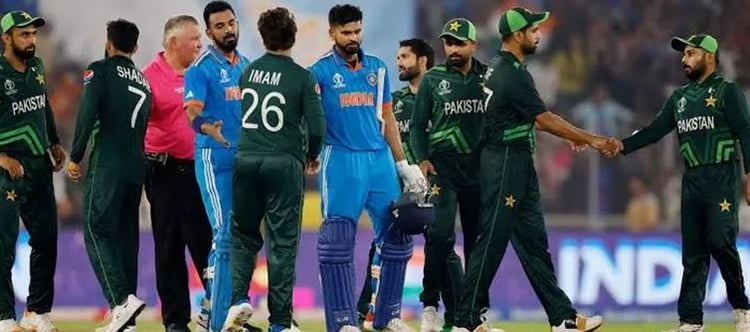
Now, reports and discussions around Pakistan’s expectations before agreeing to future high-profile clashes have reignited debate. Revenue sharing. Bilateral cricket restoration. Even symbolic gestures like handshake protocols.
On the surface, these sound procedural. Underneath, they reveal the deep fault lines that define cricket’s most intense rivalry.
💰 1. The ICC Revenue Question: Follow the Money
At the centre of the tension is financial distribution within the international cricket Council (ICC).
india, via the Board of Control for cricket in india (BCCI), generates a massive portion of global cricket revenue through broadcasting, sponsorship, and market scale.
pakistan, governed by the pakistan cricket Board (PCB), has previously voiced concerns about revenue imbalance.
From one lens, it’s about fairness and sustainability.
From another, it’s about leverage.
When india plays pakistan in an ICC event, global viewership spikes dramatically. Advertising rates surge. wallet PLATFORM' target='_blank' title='digital-Latest Updates, Photos, Videos are a click away, CLICK NOW'>digital traffic explodes. That single match can financially outperform entire tournaments.
So yes — revenue matters. Because cricket today is as much business as sport.
📢 2. Bilateral Cricket: The frozen Bridge
india and pakistan have not played a full bilateral series in over a decade due to diplomatic tensions.
Matches now occur only in multi-national tournaments like World Cups or Asia Cup events.
Pakistan’s call for the restoration of bilateral cricket touches a sensitive nerve. Bilateral series mean:
Long-format tours
Home-and-away matches
Direct revenue for both boards
Regular engagement
But geopolitics has kept that door largely shut.
cricket, in this context, becomes a mirror of foreign policy. The pitch reflects diplomacy.
🤝 3. The Handshake Protocol Debate: Symbolism Matters
At first glance, handshake enforcement sounds minor.
But symbolism in India–Pakistan games carries enormous weight.
Post-match gestures — handshakes, jerseys exchanged, visible sportsmanship — are often scrutinized by media and fans alike.
When tensions rise off-field, even body language on-field becomes headline material.
Insisting on formalized protocols isn’t just about courtesy. It’s about optics. It’s about signaling civility amid rivalry.
🔥 4. Why This Is Bigger Than Cricket
india vs pakistan isn’t just a sporting fixture. It’s one of the most commercially valuable matchups in global sports.
Broadcasters bid aggressively. Sponsors align campaigns months in advance. social media engagement peaks worldwide.
Any negotiation around conditions isn’t simply administrative. It’s strategic positioning.
Each board understands its value.
Each understands the leverage the other holds.
And the ICC stands in the middle, balancing commercial interests with political sensitivities.
⚖️ 5. The Real Question: Who Needs Whom More?
Does pakistan need India’s market scale?
Does india need pakistan to sustain the rivalry’s intensity?
The brutal truth: both benefit enormously from the fixture.
Without pakistan, India’s biggest sporting rivalry loses emotional voltage.
Without india, pakistan loses its most commercially powerful opponent.
It’s a paradox of mutual dependence wrapped in diplomatic distance.
The Final Word
At the end of the day, fans want one thing: the match.
But behind every India–Pakistan encounter lies negotiation, revenue models, political realities, and symbolic gestures loaded with meaning.
This isn’t just about who wins the toss.
It’s about who controls the terms.
And until those terms align, the most anticipated game in cricket will continue to be negotiated long before the first ball is bowled. 🏏🔥
 click and follow Indiaherald WhatsApp channel