


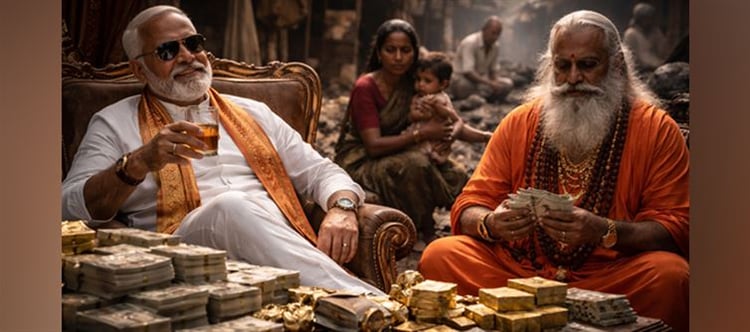

There’s a hard truth many people sense but rarely say out loud: when a country remains poor while its politicians and religious leaders grow visibly richer, something isn’t working the way it should.
Because in a healthy system, progress is shared.
Economic growth doesn’t just show up in the lifestyles of those at the top—it reflects in better jobs, stronger infrastructure, accessible healthcare, and real opportunities for ordinary people. When that gap widens instead of shrinking, it raises uncomfortable but necessary questions.
Where is the wealth coming from?
Who is benefiting from it?
And why isn’t it reaching the people who need it most?
This isn’t about targeting individuals—it’s about examining patterns.
When leaders—whether political or religious—accumulate significant influence and visible wealth while large sections of the population continue to struggle, it often points to deeper structural issues. It can indicate weak accountability, a lack of transparency, or systems that allow power to concentrate without sufficient checks.
At the same time, perception matters. Public trust depends not just on what leaders say, but on what people see. Visible inequality between leadership and citizens can erode confidence, fuel frustration, and create a sense that the system is working for a few, not for many.
But it’s also important to recognize complexity.
Wealth alone doesn’t automatically equal wrongdoing, and poverty doesn’t always stem from a single cause. Economic conditions, governance quality, policy choices, and global factors all play a role.
Still, one principle remains constant:
A country’s real strength isn’t measured by how wealthy its leaders are—it’s measured by how well its people live.
And when that balance tilts too far in one direction, it’s not just an economic issue.
It becomes a question of fairness.
 click and follow Indiaherald WhatsApp channel