




History of Muslim Personal Law Board-know what happened?
On june 27, prime minister Narendra Modi advocated the implementation of the Uniform Civil Code (UCC) in Bhopal. UCC or Uniform Civil Code is one of the three main ideological agendas of BJP. The abrogation of article 370 of the Constitution and the construction of a ram temple in ayodhya were also included in these three agendas. Now bjp is trying to finalize the UCC before the lok sabha elections. But the question is why is bjp so keen on Uniform Civil Code? While a section is boycotting it. But the Hindutva organizations seem very enthusiastic about the Uniform Civil Code. PM Modi is saying about UCC that how two types of laws can work in one family ie one nation.
Though the Constitution recommends a Uniform Civil Code, the fact remains that the UCC has been seen as having a communal agenda for a long time. Even well-known secular public intellectuals have refrained from taking a clear stand in its favor.
One of the major issues related to UCC is Muslim Personal Law. The All india Muslim Personal Law Board (AIMPLB) came into existence in 1973. But the history of personal law can be traced back as early as 1772, when religious principles were used to frame personal laws.
The foundation of Muslim Personal Law was strengthened after the Muslim Personal Law (Shariat) application Act 1937 and the Muslim marriage Act. The triple talaq bill was passed in 2019. After the introduction of this bill, there was a big change in Muslim personal law. In the case of triple talaq, many experts believed that this law would bring internal reforms within the community.
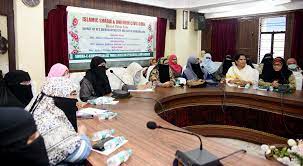
The big leaders leading the Muslim community in independent india have been associated with secular parties. The Muslim community hardly has any independent leadership. Even the Deoband leadership remained in alliance with the congress for a long time. Due to this, despite having a Personal Law Board, there has been no internal improvement. Many feminists and Muslim women's organizations who are fighting against gender discrimination say that the All india Muslim Personal Law Board (AIMPLB) has presented arguments on the basis of male supremacy in the Shah Bano case.
 click and follow Indiaherald WhatsApp channel