

-

Amit Shah
-
Arvind Kejriwal
-
Audience
-
Bharatiya Janata Party
-
Cabinet
-
CM
-
Congress
-
Cycle
-
Delhi
-
Election
-
Elections
-
Episode
-
Government
-
HEALTH
-
House
-
India
-
Indian
-
Loksabha
-
Minister
-
National Democratic Alliance
-
News
-
Office
-
Parliament
-
Party
-
politics
-
Press
-
Prime Minister
-
Punjab
-
Sanjay Singh
-
Shadow
-
Telangana Chief Minister
-
Uttar Pradesh
-
VIEW
-
WATCH
-
WhatsApp

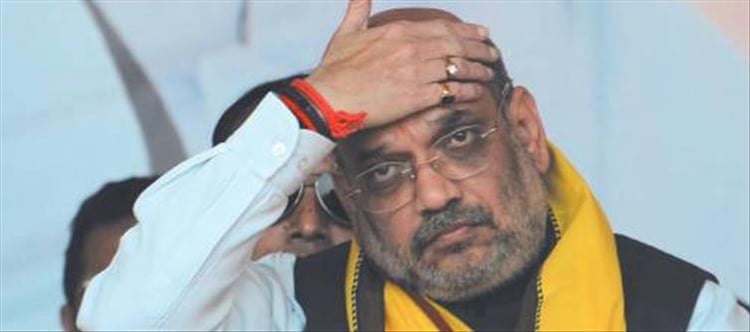
Union home minister amit Shah's meeting with the President of india has triggered intense speculation about an imminent Modi cabinet reshuffle. According to Deccan Chronicle, Shah called on the President amid swirling rejig buzz — but the deeper signal, analysts say, may be BJP's internal factional recalibration and pre-2027 election positioning rather than any single portfolio swap. As of publication, neither the Prime Minister's office nor the bjp has officially confirmed or denied reshuffle plans.
In indian politics, when the home minister visits the President and the word 'courtesy' appears in the official readout, you can safely assume courtesy is the last thing on anyone's mind. amit Shah's call on the President of india this week has set off the kind of New delhi rumour cycle that makes whatsapp groups vibrate harder than the parliament benches during Question Hour — and for good reason.
According to Deccan Chronicle, Shah's meeting came squarely amid buzzing speculation about a Modi cabinet reshuffle. The report describes the visit as a formal meeting, though no official agenda was disclosed by either side. No press conference followed. Just the image of the BJP's most formidable organiser walking into the presidential residence while half of Lutyens' delhi furiously refreshed its news feeds.
India Herald was unable to independently verify the details of the meeting's agenda. Neither the PMO nor the bjp spokesperson had officially commented on cabinet reshuffle reports as of publication.
But here is what the press releases will not tell you: a cabinet reshuffle at this precise point in the nda government's term, political analysts note, is never merely administrative. It is architecture. It is the blueprint for 2027.
The Timing Is the Tell
We are deep enough into the current lok sabha term that ministerial performance reviews carry genuine weight — enough data has accumulated, enough state elections have come and gone, enough factional grievances have built up. Yet we are still far enough from the next general election for any reshuffled minister to actually prove their worth in a new portfolio before voters are asked to judge the government. This is the sweet spot, observers of BJP's organisational strategy suggest, for a prime minister who governs by performance metrics and for a party president who manages by leverage.
Shah himself has been conspicuously active in recent days, as Deccan Chronicle's reporting timeline suggests. His public engagements have carried a distinctly ideological tenor — the kind of foundational narrative-building that bjp watchers associate with periods preceding major organisational or structural moves within the party.
View on X
That ideological ground-setting is worth noting. When the BJP's top strategist simultaneously tends to the party's ideological narrative and meets the constitutional head required to formally approve ministerial changes, the political class — rightly or wrongly — reads it as a signal, not a coincidence.
Who Really Gets Reshuffled — Ministers or Factions?
The conventional cabinet rejig story focuses on who gets which portfolio. But that framing, several political commentators argue, misses the forest for the ministerial berths. In the BJP's internal grammar, a reshuffle typically serves at least three simultaneous purposes: rewarding allies whose state-level machinery delivered in recent elections, addressing underperformance that may create electoral liability, and — most critically — recalibrating the balance between the party's multiple power centres.
Consider the coalition arithmetic. The NDA's dependence on alliance partners means any rejig must satisfy not just BJP's internal wings but also the demands of regional allies who measure their relevance in cabinet representation. Every portfolio allocated to an ally is one denied to a bjp aspirant; every bjp aspirant denied is a potential source of internal tension that party managers must address.
Shah's own public messaging in recent days has carried what commentators describe as an unmistakable ideological edge — touching on themes central to the BJP's core narrative, including its position on Article 370, India's post-independence trajectory, and cooperative federalism. These are not random talking points, analysts say. They are the vocabulary of a party consolidating its ideological base before making structural moves that might, temporarily, unsettle internal hierarchies.
It is important to note that opposition parties have not yet issued formal responses to the reshuffle speculation. india Herald has reached out for comment and will update this analysis as responses become available.
The 2027 shadow Over Every Move
Every cabinet reshuffle in a government deep into its term carries the unspoken question: is this about governing, or about the next election? The honest answer, as any veteran of South Block will tell you, is always both — and the proportions shift depending on how far away polling day feels.
Right now, 2027 is close enough to cast a long shadow. State elections in several crucial battlegrounds are approaching. The BJP's organisational machinery, which Shah himself built into what is widely regarded as India's most formidable electoral engine, requires ministers who can double as regional campaign anchors. A reshuffle that places strong communicators and proven vote-getters in high-visibility portfolios is, functionally, what political strategists describe as campaign deployment structured as governance reform.
This is the calculus that Deccan Chronicle's report hints at without stating outright: the Shah-President meeting may be procedural in form, but it could prove strategic in substance. In BJP's established pattern, political observers note, no meeting at Rashtrapati Bhavan during rejig season is ever just a courtesy call. It is either the opening move or the confirmation that the chess pieces have already been decided and the formal notification is imminent.
What to watch Next
The clearest indicator, veteran political reporters suggest, will not come from official announcements but from the travel schedules of senior bjp leaders over the coming days. If ministers begin making sudden trips to their home states — particularly those who have been in Delhi-bound portfolios — the reshuffle is not just buzz but imminent reality. watch also for the alliance partners' public statements: any nda ally who suddenly goes quiet after weeks of vocal demands may have been given private assurances about cabinet representation.
The deeper question this episode forces is one the bjp has navigated with remarkable discipline so far but which grows harder with every passing year of incumbency: can a party that runs on ideological cohesion and organisational hierarchy continue to manage the centrifugal pressures of coalition governance, regional ambition, and generational transition — all while keeping its most powerful leader, amit shah, as both chief strategist and senior minister?
That question will not be answered by one reshuffle. But every reshuffle is a data point. And this one, if it comes, will tell us whether the bjp of 2026 is still building for dominance or beginning, however subtly, to manage the politics of incumbency.
This is an analysis piece. india Herald will update this story as official confirmations or denials emerge from the PMO, bjp, or Rashtrapati Bhavan.
More from india Herald

Key Takeaways
- Amit Shah's meeting with the President of india has triggered intense cabinet reshuffle speculation, according to Deccan Chronicle. Neither the PMO nor bjp has officially confirmed or denied the reports.
- A mid-term cabinet rejig, analysts say, typically serves triple bjp purposes: rewarding allies, addressing underperformance, and recalibrating factional balance ahead of 2027 elections.
- Shah's concurrent ideological messaging suggests what commentators describe as deliberate narrative consolidation before potential structural changes within the party.
- Coalition arithmetic means any reshuffle must satisfy nda allies' portfolio demands while managing bjp internal aspirants' expectations — a delicate balancing act.
- The timing — deep enough into the term for performance data, far enough from 2027 for new ministers to prove themselves — represents what strategists call the sweet spot for pre-election positioning.
Frequently Asked Questions
Why did amit shah meet the President of India?
According to Deccan Chronicle, Shah called on the President in what was described as a formal meeting amid strong speculation about an imminent Modi cabinet reshuffle. No official agenda was disclosed by either side, and neither the PMO nor bjp has commented on the purpose of the visit.
Is a Modi cabinet reshuffle confirmed for 2026?
No official confirmation has been issued as of publication. Deccan Chronicle reports that Shah's presidential meeting has intensified speculation. In India's constitutional process, the President formally approves ministerial appointments on the Prime Minister's advice, making such meetings procedurally significant.
What does a cabinet reshuffle mean for BJP's 2027 election strategy?
Analysts view mid-term reshuffles as opportunities to position strong regional leaders in high-visibility portfolios ahead of elections. The timing — well before 2027 polls — allows new ministers to establish track records in their portfolios, effectively serving as early campaign deployment.
How does a cabinet rejig affect nda coalition partners?
Coalition partners measure their political relevance partly through cabinet representation. Any reshuffle requires balancing BJP's internal demands with allies' expectations for portfolio allocation, making it a complex exercise in coalition management.
 click and follow Indiaherald WhatsApp channel