


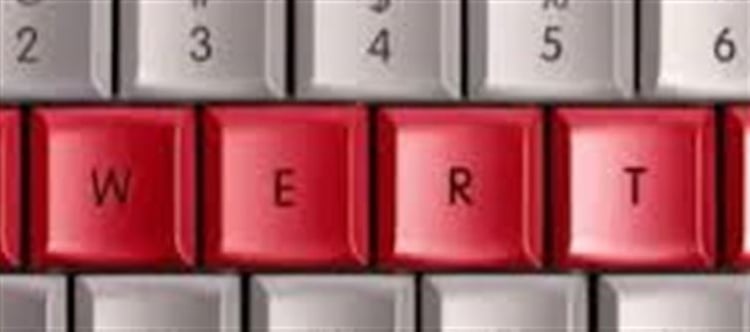

Ever wondered why your keyboard doesn’t have letters arranged from A to Z? There’s a fascinating history behind this seemingly random layout.
1️⃣ 🕰️ The Origins: Typewriters and the QWERTY Layout
The modern keyboard comes from the typewriter, invented in the 19th century.
Early typewriters often jammed if adjacent keys were pressed too quickly.
To prevent jams, inventor Christopher Sholes arranged the keys so that common letter pairings were spread apart.
💡 Surprising fact: QWERTY wasn’t designed for speed—it was designed to slow typists down slightly to reduce jams.
2️⃣ 📊 Frequency of letters Played a Role
Letters like E, T, A, O, I, N, S, H, R are most common in English.
By separating frequently used letters, typewriters avoided mechanical clashes.
Less common letters like Q, Z, and X were placed in harder-to-reach spots.
💡 Fun tip: This is why typing “THE” uses keys on different sides of the keyboard!
3️⃣ 🖐️ Ergonomics and Typing Flow
QWERTY also balances typing between left and right hands.
It allows for a more natural hand alternation, reducing fatigue on mechanical typewriters.
Modern keyboards retain this layout for familiarity and muscle memory, even though jams aren’t an issue anymore.
💡 Trivia: Even on smartphones, QWERTY persists because people are used to it.
4️⃣ 🔄 Alternatives Tried Over Time
Dvorak Simplified Keyboard (1930s) aimed for faster typing with minimal finger movement.
Colemak layout tries to optimize for typing speed while keeping some familiarity.
Despite advantages, QWERTY dominates due to decades of established typing habits.
💡 Observation: Switching layouts is possible, but most people stick with QWERTY because it’s everywhere.
5️⃣ 🧠 Bottom Line: It’s history, Not Logic
Keyboard letters aren’t in ABCDE order because mechanical limitations, typing frequency, and ergonomics shaped the layout.
QWERTY became standard due to habit and global adoption, not because it’s the most logical order.
Today, it’s a classic example of how technology decisions from the past shape modern life.
💡 Fun thought: Next time you type “HELLO,” remember you’re using a design over 150 years old!
Disclaimer:
The views and opinions expressed in this article are those of the author and do not necessarily reflect the official policy or position of any agency, organization, employer, or company. All information provided is for general informational purposes only. While every effort has been made to ensure accuracy, we make no representations or warranties of any kind, express or implied, about the completeness, reliability, or suitability of the information contained herein. Readers are advised to verify facts and seek professional advice where necessary. Any reliance placed on such information is strictly at the reader’s own risk.
 click and follow Indiaherald WhatsApp channel