


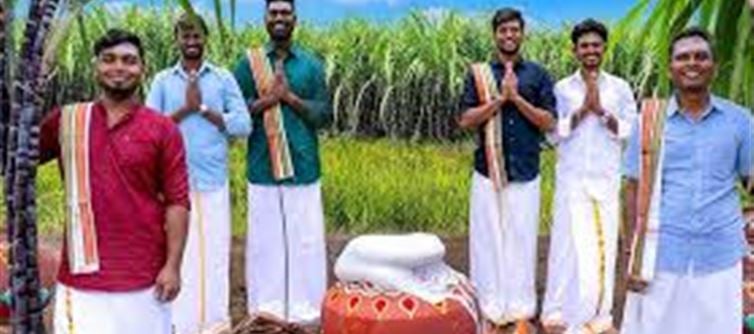

Thai Pongal is one of the most important harvest festivals in tamil Nadu, celebrated with great enthusiasm, especially by farmers and families. Here’s a detailed look at how people celebrate Thai Pongal:
🌾 1. Cleaning and Decorating the House
- In the days leading up to Thai pongal, families thoroughly clean their homes to welcome prosperity.
- The entrances are decorated with kolam (intricate patterns made with rice flour) to invite good luck and positive energy.
- Mango leaves and turmeric garlands are often used as traditional decorations.
🍲 2. Preparing the pongal Dish
- The central ritual is cooking the special sweet dish called ‘Pongal’, made from newly harvested rice, jaggery, and milk.
- It is traditionally cooked in a new clay pot, placed outdoors under the sun, symbolizing gratitude to the sun God.
- As the milk boils and sometimes overflows, people shout “Pongalo Pongal!” to celebrate abundance and prosperity.
- Variations of pongal include Ven Pongal (savory) and Sakkarai Pongal (sweet).
🐄 3. Worship and Gratitude
- Farmers offer prayers to Surya (the sun God), thanking him for a bountiful harvest.
- They also worship cattle, as cows and bulls are considered essential for farming. This is called Mattu Pongal, observed the day after Thai Pongal.
- Items like sugarcane, turmeric, and banana are offered as part of the ritual.
🏡 4. Social and Cultural Activities
- Families visit relatives and friends, exchanging greetings and gifts.
- Communities often gather to play traditional games, sing folk songs, and perform dances, keeping the cultural spirit alive.
- It’s also a time for charity, as people share food and resources with the less fortunate.
🌞 5. Timing and Spiritual Significance
- Thai pongal is celebrated in the month of Thai (January) when the sun enters the Capricorn sign.
- The festival marks the beginning of the harvest season and expresses gratitude to nature for its abundance.
✨ Summary
Thai pongal is not just about food; it’s a celebration of life, harvest, and gratitude. Key elements include:
- Kolam and house decoration for positivity.
- Cooking sweet pongal outdoors as an offering to the sun God.
- Prayers to cattle and nature.
- Family gatherings, music, and charity.
It’s a vibrant mix of religion, culture, and community, making it one of the most beloved festivals in tamil Nadu.
Disclaimer:
The views and opinions expressed in this article are those of the author and do not necessarily reflect the official policy or position of any agency, organization, employer, or company. All information provided is for general informational purposes only. While every effort has been made to ensure accuracy, we make no representations or warranties of any kind, express or implied, about the completeness, reliability, or suitability of the information contained herein. Readers are advised to verify facts and seek professional advice where necessary. Any reliance placed on such information is strictly at the reader’s own risk.
 click and follow Indiaherald WhatsApp channel