


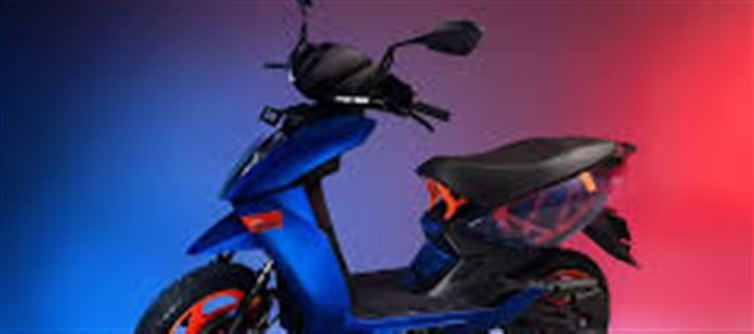

📉 Facing a Competitive EV Market
Ather Energy has traditionally positioned itself in the premium EV scooter segment with models like the Ather 450 series and Rizta, which sit around ₹1.15 lakh and above — making them slightly above entry‑level offerings.
However, with rivals such as Ola Electric, TVS, hero Vida and others offering aggressively priced scooters, there’s increasing pressure on Ather to broaden its price range and attract mass‑market EV buyers.
🤝 Battery‑as‑a‑Service (BaaS) Option — A Key Affordability Lever
One major move by Ather to make its scooters more affordable is its Battery‑as‑a‑Service (BaaS) ownership model:
- Under BaaS, buyers pay only for the scooter body upfront, and the battery cost is handled via a subscription or usage‑based fee, rather than a large one‑time payment.
- This can reduce the upfront cost by 30‑40 %, bringing models such as the Ather Rizta and 450 series well below ₹1 lakh on paper for the initial outlay — sometimes as low as ₹75,999 for a base Rizta and ₹84,341 for a 450 version before battery costs.
- The approach shifts more cost into a monthly or per‑kilometre payment, similar to a utility billing structure, making EV ownership more accessible for many commuters.
This doesn’t strictly mean the scooter itself is cheaper, but it lowers the barrier to entry in terms of upfront spending.
🚀 New EL Platform for Genuine Low‑Cost Models
Ather has been developing a new EV platform called EL that’s aimed at producing truly lower‑cost electric scooters tailored for wider adoption:
- The EL platform was first revealed at Ather’s Community Day in 2025, and is designed to deliver cost‑efficient production without major compromises on quality.
- According to industry reports and patent filings, the first scooters based on this platform are expected to arrive in 2026, potentially priced well under ₹1 lakh — significantly under the popular ₹1.25 lakh benchmark often cited for affordable EV segments.
- A production version of the EL01 concept has been patented and is expected to launch with designs suitable for everyday urban commuters — even while retaining under‑seat storage and connectivity features.
This platform will allow Ather to compete more directly with other budget electric scooters that are currently selling around or below ₹1.25 lakh.
🛵 Where Ather’s Current Models Sit Today
While the new affordable model isn’t on sale yet, Ather’s existing line‑up already includes some relatively accessible scooters:
Model
Ex‑Showroom Price Range
Notes
Ather Rizta
₹1.15 L – ₹1.76 L
Family‑oriented scooter, one of Ather’s most accessible offerings.
Ather 450S
~₹1.22 L+
Lower‑priced variant in the 450 series.
These models aren’t strictly under ₹1.25 lakh in their standard form, but Ather’s pricing and ownership plans are evolving toward that segment.
📈 Why This Matters for EV Adoption
Ather’s affordability push is important because:
- EV penetration in India is still relatively low compared with petrol vehicles, and price is a key barrier for many buyers.
- Lower‑cost scooters — either via BaaS or new platforms — help bridge the gap between premium EVs and mass‑market commuters.
- This strategy could broaden EV adoption — especially among urban and peri‑urban riders looking for everyday commuting solutions affordable within approximately ₹1 lakh to ₹1.25 lakh budgets.
🗓️ What’s Next
- Affordable EL platform scooters are anticipated to hit the market in 2026, potentially under ₹1 lakh retail price.
- Ather continues to expand its retail footprint to support wider distribution for both current and future models.
Summary
Ather isn’t currently selling a standalone model priced strictly under ₹1.25 lakh in the conventional sense, but it’s actively working on strategies to make EV scooters more affordable through:
- Battery‑as‑a‑Service (BaaS) to significantly reduce upfront costs.
- New EL platform scooters expected later in 2026, aimed at sub‑₹1 lakh pricing and mainstream buyers.
- Continuously competing with rivals such as ola Electric, TVS iQube and others in the broader EV adoption push.
Disclaimer:
The views and opinions expressed in this article are those of the author and do not necessarily reflect the official policy or position of any agency, organization, employer, or company. All information provided is for general informational purposes only. While every effort has been made to ensure accuracy, we make no representations or warranties of any kind, express or implied, about the completeness, reliability, or suitability of the information contained herein. Readers are advised to verify facts and seek professional advice where necessary. Any reliance placed on such information is strictly at the reader’s own risk.
 click and follow Indiaherald WhatsApp channel