
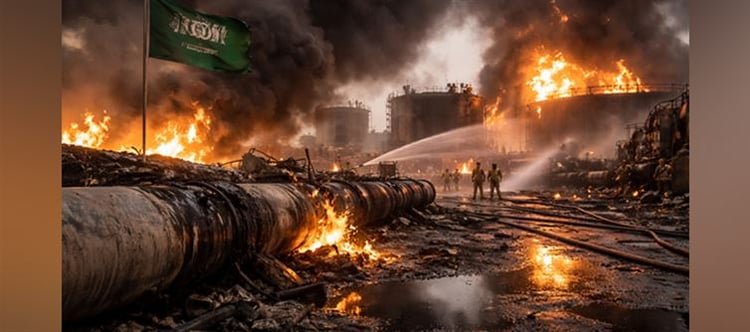

 “One Strike. $60 Million a Day Gone.” — How a Single Hit Exposed Saudi Arabia’s Fragile Oil Lifeline
It took just one strike to unravel a carefully built safety net. saudi arabia, long seen as the ultimate stabilizer of global oil supply, suddenly finds itself exposed—its main route constrained and its backup compromised. In a region where energy is power, this isn’t just a disruption. It’s a warning shot.
The Hit That Hurt
Reports indicate that a key pumping station on the east-west pipeline—Saudi Arabia’s strategic alternative to the Strait of Hormuz—was struck, knocking out roughly 600,000 barrels per day of production capacity. The human cost is already real, with at least one worker killed. The economic cost? Roughly $60 million a day is evaporating almost instantly.
Why This Pipeline Matters
Built in 1981, the east-west pipeline was designed for precisely this kind of crisis. If Hormuz became impassable, Saudi oil could still flow west to the red Sea and reach global markets. It was the kingdom’s insurance policy against regional instability. Now, that insurance looks alarmingly thin.
Both Routes Under Pressure
With tensions disrupting traffic through the Strait of Hormuz and damage now affecting the alternative route, saudi arabia faces a rare and dangerous scenario: both export pathways under strain at the same time. It’s not just a logistical issue—it’s a strategic choke point.
Neutral, But Not Untouched
Riyadh largely stayed on the sidelines, avoiding direct involvement in the conflict. But neutrality hasn’t translated into safety. The spillover effect is clear—when regional tensions escalate, even those trying to stay out can’t stay untouched.
Vision 2030 Meets Reality
Crown prince Mohammed bin Salman’s Vision 2030 aims to diversify saudi arabia beyond oil, backed by a staggering $500 billion investment. Yet this incident underscores a stubborn truth: the kingdom’s economic core is still deeply tied to النفط. One targeted strike has exposed just how much still depends on it.
Bottom Line
This isn’t just about lost barrels—it’s about vulnerability. saudi arabia built a fallback plan for worst-case scenarios. Now, with both primary and backup routes under pressure, the message is stark: in a volatile region, even the strongest safeguards can crack overnight.
 click and follow Indiaherald WhatsApp channel