


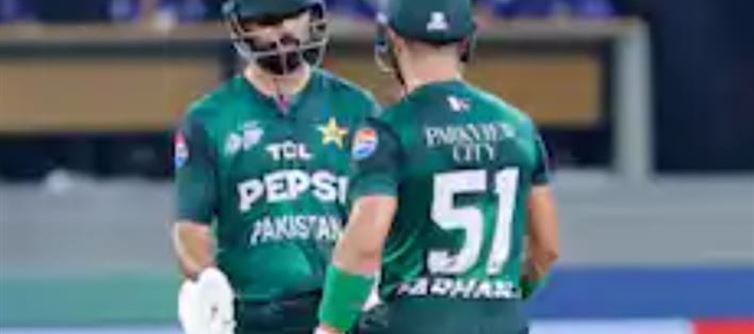

Political Call, Sporting Cost
Pakistan’s government-mandated boycott of the IND vs PAK clash on February 15 was meant as a political signal.
In cricketing terms, however, the decision creates a severe competitive disadvantage for Pakistan.
Under ICC rules, a refusal to play is treated as a forfeit, not a no-result or washout.
Instant Points Deficit
India is awarded 2 points automatically for the forfeited match.
Pakistan received 0 points, without facing a single delivery.
With only four group matches per team, Pakistan’s maximum possible tally drops to 6 points.
Historically, 6 points is a danger zone, often forcing teams to rely on Net Run Rate (NRR) or external results to qualify.
Three Matches Turn Into Virtual Knockouts
Remaining fixtures for Pakistan:
vs netherlands – Feb 7
vs USA – Feb 10
vs namibia – Feb 18
All three matches are now must-win encounters.
Losing even one game would cap pakistan at 4 points, a total that has rarely been enough to finish top two in a five-team group.
The “USA Ghost” Returns
Pakistan still carries scars from the 2024 t20 World Cup, where the USA stunned them in a Super Over.
That upset directly contributed to Pakistan’s early exit.
The USA has already shown they can upset pakistan even without forfeits, influencing the table.
Net Run Rate Nightmare
A boycott means no opportunity to control damage, as in a close loss.
Pakistan gained no runs, no overs, and no NRR buffer from the india match.
If teams finish level on points, NRR could be the decisive factor, and pakistan would be at a built-in disadvantage.
Colombo Weather Factor
February weather in Colombo is notoriously unpredictable.
Any washout in Pakistan’s remaining games would yield just 1 point.
Boycott + one washout = maximum of 5 points, a scenario almost guaranteed to eliminate pakistan before the Super 8 stage.
Disclaimer:
The information contained in this article is for general informational purposes only. While we strive to ensure accuracy, we make no warranties or representations of any kind, express or implied, about the completeness, accuracy, reliability, suitability, or availability of the content. Any reliance you place on the information is strictly at your own risk. The views, opinions, or claims expressed in this article are those of the author and do not necessarily reflect the official policy or position of any organization mentioned. We disclaim any liability for any loss or damage arising directly or indirectly from the use of this article.
 click and follow Indiaherald WhatsApp channel