
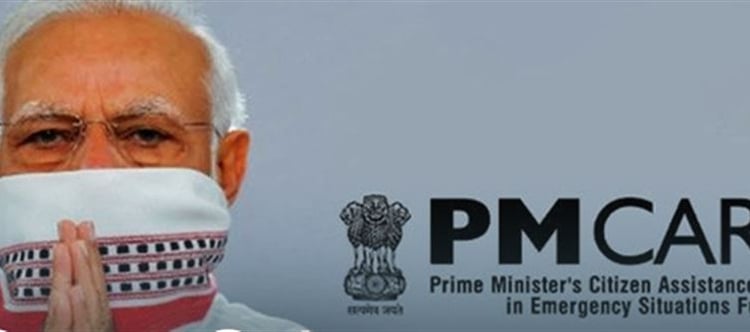


In a democracy, questions are currency. parliament is where the government is expected to answer — especially on matters involving thousands of crores in public contributions.
But now, a fresh procedural development has reignited debate.
According to reporting by The india Herald, the Prime Minister’s office (PMO) has informed the lok sabha secretariat that questions related to PM CARES Fund, the Prime Minister’s National Relief Fund (PMNRF), and the National Defence Fund (NDF) are not admissible under certain rules governing parliamentary business.
The reasoning? These funds are not primarily the concern of the government of india under the Rules of Procedure of the Lok Sabha.
This isn’t just a technicality. It’s a constitutional conversation.
🏛 1. The Rulebook Argument
The PMO reportedly cited:
Rule 41(2)(viii) — Questions must relate to matters primarily concerning the government of India.
Rule 41(2)(xvii) — Questions cannot raise matters under bodies not primarily responsible to the Government.
The PMO’s position, as reported, is that these funds:
Are constituted through voluntary public contributions.
Are not financed from the Consolidated Fund of India.
Are structured as public charitable trusts.
Therefore, they fall outside the scope of parliamentary questioning.
Procedurally, it’s a rule-based argument.
Politically, it’s explosive.
💰 2. The Funds at the Centre of the Debate
🔹 PM CARES Fund
Established on march 27, 2020, during the COVID-19 pandemic, registered as a Public Charitable Trust under the Registration Act, 1908.
As per the latest publicly available receipts and payments statement (2022-23), the balance stood at approximately ₹6,283.7 crore as of march 2023.
🔹 Prime Minister’s National Relief Fund (PMNRF)
Set up in 1948 to assist displaced persons and now used for relief during natural calamities and major accidents.
🔹 National Defence Fund (NDF)
Supports the welfare of armed forces personnel and their families.
All three are administered with the prime minister in key positions.
Yet, legally, they are framed as trusts — not statutory bodies created by Parliament.
⚖️ 3. The “Not a State” Position
In january 2023, the Centre informed the delhi High court that PM CARES:
Is not created under the Constitution or any parliamentary law.
Is not owned or controlled by the government.
Does not qualify as a “public authority” under the RTI Act.
This position was also central in prior litigation.
In august 2020, the supreme court of india declined to direct the transfer of PM CARES funds to the National Disaster Response Fund, observing that they are distinct entities with different purposes.
The court noted that NDRF is audited by the Comptroller and Auditor General (CAG), while PM CARES, being a charitable trust, does not fall under the same audit mechanism.
Legally consistent.
But politically contentious.
📊 4. The Transparency Question
Critics argue:
If the prime minister chairs the trust,
If government infrastructure supports it,
If PSUs and public sector employees have contributed,
Then, parliamentary oversight should logically apply.
Supporters counter:
Voluntary public contributions do not equal public exchequer funds.
The trust structure exempts it from parliamentary control.
Independent audits are conducted (though not by CAG).
The tension lies in the interpretation of “control” and “concern.”
🔍 5. CSR, PSU Contributions & Public Perception
Earlier reporting indicated:
Over ₹2,400 crore from corporate Social Responsibility (CSR) allocations.
Contributions from over 100 public sector undertakings.
Approximately ₹155 crore reportedly from PSU staff salary donations.
These details fuel public perception that while technically a trust, the fund operates within a government ecosystem.
That perception gap drives the controversy.
🧠 6. Procedure vs Principle
Technically:
The PMO’s communication appears rooted in a procedural interpretation of parliamentary rules.
Politically:
Opposition parties argue that parliament is the supreme forum of accountability.
When elected representatives cannot raise questions in the House, critics say transparency is weakened — even if legally defensible.
🔥 7. The Bigger Democratic Question
This debate isn’t only about PM CARES.
It’s about:
What defines a “government concern”?
When does public association trigger parliamentary scrutiny?
Can a fund closely linked to a high public office remain structurally insulated from legislative questioning?
Democracies evolve through such friction.
🏁 The Bottom Line
No law has declared PM CARES illegal.
No court has struck down its structure.
No finding has established wrongdoing.
But procedural insulation from parliamentary questioning raises a legitimate governance debate.
In a system built on accountability, the most powerful question is often the simplest:
If not in parliament, then where?
 click and follow Indiaherald WhatsApp channel