


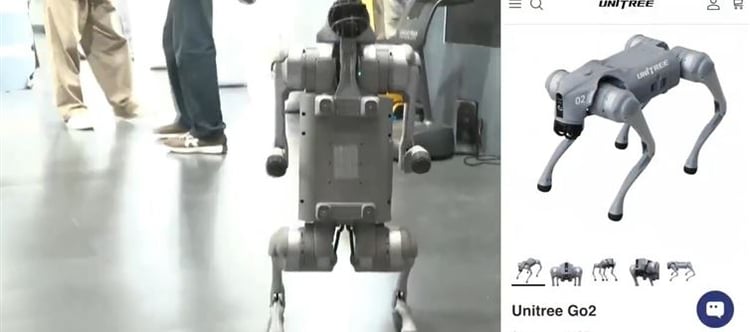

The india AI Impact Summit 2026 in delhi is buzzing with hype. Everyone's talking big about India's push to become an AI superpower. Booths are flashing with promises of cutting-edge innovation, massive investments, and homegrown tech that's supposed to put us on the map. Then, out trots a cute little robot dog – wowing crowds, getting all the attention.
Galgotias university calls it "Orion," part of their flashy ₹350+ crore AI ecosystem. wipro dubs theirs "TJ." Sounds impressive, right? Until you realize... It's just a commercially available Chinese Unitree Go2 you can buy online for about $2,800 (roughly ₹2-3 lakh). No original R&D, no groundbreaking tweaks – just a quick rebrand and a spotlight grab. And now the internet is roasting us alive. This isn't progress; it's a cringeworthy shortcut that's eroding whatever credibility india has left in global AI. Let's break down why this mess is so damaging, point by brutal point.
Galgotias university calls it "Orion," part of their flashy ₹350+ crore AI ecosystem. wipro dubs theirs "TJ." Sounds impressive, right? Until you realize... It's just a commercially available Chinese Unitree Go2 you can buy online for about $2,800 (roughly ₹2-3 lakh). No original R&D, no groundbreaking tweaks – just a quick rebrand and a spotlight grab. And now the internet is roasting us alive. This isn't progress; it's a cringeworthy shortcut that's eroding whatever credibility india has left in global AI. Let's break down why this mess is so damaging, point by brutal point.
It's Straight-Up Deceptive – Even If They Say Otherwise
Galgotias paraded "Orion" front and center in their booth, tying it to a massive ₹350 crore AI investment narrative. Sure, they've since clarified it was "for student learning," and they "never claimed" it as their own development. But come on – when you showcase a rebranded off-the-shelf product at a national summit like it's part of your big AI push, you're inviting the perception that it's homegrown. That's not transparency; that's relying on optics to inflate your achievements. And when the truth drops? Instant backlash, instant embarrassment.
Galgotias paraded "Orion" front and center in their booth, tying it to a massive ₹350 crore AI investment narrative. Sure, they've since clarified it was "for student learning," and they "never claimed" it as their own development. But come on – when you showcase a rebranded off-the-shelf product at a national summit like it's part of your big AI push, you're inviting the perception that it's homegrown. That's not transparency; that's relying on optics to inflate your achievements. And when the truth drops? Instant backlash, instant embarrassment.
A $2,800 gadget Masquerading as an "AI Breakthrough"? Give Me a Break
This isn't some rare prototype – it's the Unitree Go2, available to anyone with a credit card on Chinese sites. Flip it upside down, make it dance, whatever – it's cool tech, but it's not revolutionary. Presenting it as a highlight of indian AI prowess is like buying a ready-made cake, slapping your name on it, and entering a baking contest. Savage? Yes. Accurate? Absolutely. We're hyping imported goods while real innovators elsewhere are building from scratch.
Where Did the ₹350 Crore Actually Go? Serious Questions Need Answers
Galgotias boasts a ₹350+ crore AI ecosystem with NVIDIA supercomputing and fancy centers of excellence. Great on paper. But when your star exhibit is a purchased Chinese robot with a new sticker, people start wondering: Is all that money fueling genuine R&D, or just flashy demos and marketing? No evidence ties those funds to the original robotics work here. This kind of optics-over-substance erodes trust fast – from students, investors, and the global community watching India's AI claims.
It's not isolated. wipro rolled out "TJ," their version of the exact same Unitree bot. Two major players at the same summit, pulling the same rebranding trick. When leading institutions and companies resort to this, what message does it send? That India's "AI leadership" is built on shortcuts, not sweat? We're talking about organizations that should be setting examples, not cutting corners for quick applause.
This Is Killing India's Global Credibility – And We Can't Afford It
The world is watching. Chinese media picked it up, international forums are debating it, and social media is merciless. We're trying to position india as an AI powerhouse, attracting talent and investment. But stunts like this make us look desperate, dishonest, and behind the curve. Real progress comes from building, not borrowing and pretending. If we keep embarrassing ourselves on stages like this, we'll stay stuck importing tech while others dominate.
Look, india has real talent and potential in AI – brilliant minds who could create amazing things with proper support. But incidents like this robot dog fiasco distract from that, breed cynicism, and make the whole ecosystem look phony. It's time to stop the rebranding games, invest in actual innovation, and show the world what we're truly capable of. Otherwise, we're just barking up the wrong tree.
 click and follow Indiaherald WhatsApp channel