


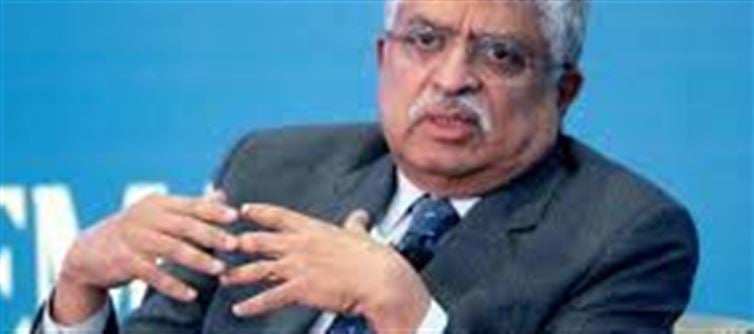

At Infosys’ Investor AI Day 2026 in Bengaluru, Nandan Nilekani addressed growing concerns from investors about the disruptive potential of generative AI (GenAI) and other new technologies. Rather than viewing disruption as a threat, he said it expands opportunities for growth and transformation for firms like Infosys.
Nilekani acknowledged that recent volatility in IT stocks — including a steep drop earlier in the month amid AI‑related anxiety — showed investor nerves around how AI will reshape the industry. But he insisted that AI is fundamentally beneficial for Infosys and the wider IT ecosystem and encouraged stakeholders not to lose sight of the potential ahead.
🔍 What Nilekani Actually Said
Speaking at the event, the Infosys chairman made several key points:
🚀 1. No Opportunity Gap — AI Is a Growth Engine
Nilekani emphasized that there is “no opportunity gap” created by AI — instead, the opportunity is larger than ever for technology services companies. He said AI can significantly boost productivity and create new market demand rather than cannibalize existing business models.
He also highlighted that training and talent transformation are crucial. Rather than starting with tools, organisations must build a deep understanding of fundamentals first, enabling clear thinking and sustainable scaling of AI solutions.
🔧 2. Execution, Not Opportunity, Is the Real Risk
Nilekani stressed that while models and tools are advancing quickly, many enterprises are lagging in actual deployment, creating what he termed a “deployment gap.”
“The technology is far ahead of its deployment,” he said, warning that companies must modernise legacy systems, retrain talent and rethink operating models to make AI work in real life. AI’s biggest risk is not missing opportunity — it’s poor execution.
This message was aimed both at clients and investors: organisations need effective implementation plans and organisational change to harness AI’s power — otherwise, tools alone won’t deliver value.
💼 3. New Roles and Talent Demand
Nilekani also pointed out that AI will reshape job roles and create new areas of expertise rather than simply eliminating jobs. He listed emerging roles such as:
- AI engineers
- Forward deployment engineers
- AI leads
- Forensic analysts
…suggesting the shift isn’t just about automating tasks, but about reimagining talent and skills for a new age.
📈 4. Positive Market Reaction to Comments
His remarks appeared to have an immediate impact on investor sentiment. After his and other leaders’ commentary on AI, the Nifty IT index jumped nearly 3%, with Infosys’ share price among the biggest gainers — signalling renewed confidence in the sector’s prospects.
📌 Why This Matters for the IT Sector
Nilekani’s comments come at a critical time as global IT firms face pressure from:
- Rapid advancements in AI tools and models
- Fears that AI may reduce demand for traditional tech services
- Investors questioning how services companies will grow revenues and margins amid automation trends
His message reframes this disruption: AI isn’t eliminating opportunity — it’s just changing its shape. Firms that can modernise, reskill and implement effectively stand to benefit the most.
🧠 Final Takeaway
Artificial intelligence isn’t shrinking the market for IT services — it’s expanding it:
- More tools → more productivity → more demand for integration and transformation
- Training and execution → key competitive advantages
- Legacy systems → biggest barrier to adoption
This high‑level optimism — backed by strategy and execution focus — is why Nilekani believes the opportunity today is bigger than ever before for firms like Infosys, even amid uncertainty and fast‑paced disruption.
Disclaimer:
The views and opinions expressed in this article are those of the author and do not necessarily reflect the official policy or position of any agency, organization, employer, or company. All information provided is for general informational purposes only. While every effort has been made to ensure accuracy, we make no representations or warranties of any kind, express or implied, about the completeness, reliability, or suitability of the information contained herein. Readers are advised to verify facts and seek professional advice where necessary. Any reliance placed on such information is strictly at the reader’s own risk.
 click and follow Indiaherald WhatsApp channel