


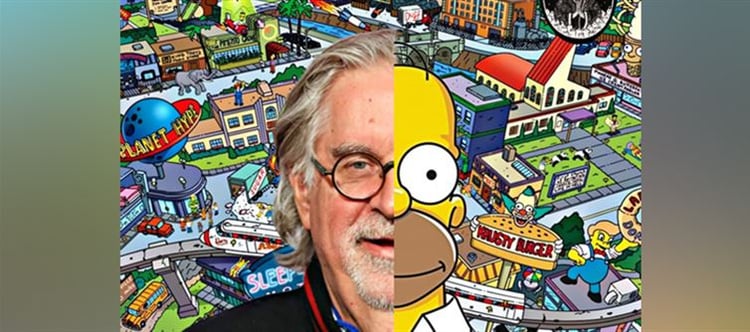

When a cartoon Joke Starts Feeling Uncomfortable
For decades, The Simpsons has built a reputation for “predicting” the future. From political twists to tech trends, fans love connecting old episodes to modern headlines. But this time, the conversation isn’t lighthearted.
The name of the show’s creator, Matt Groening, surfaced in publicly released court documents connected to Jeffrey Epstein. The mention reportedly stems from testimony by Virginia Giuffre, who alleged that Groening was present on Epstein’s plane in 2001 and requested a foot massage. Groening has denied any wrongdoing.
These aren’t anonymous forum rumors. Their names appeared in official documents made public years later. That alone is enough to reignite scrutiny — and speculation.
1️⃣ The episode That Suddenly Feels Different
Season 12. Year 2000. Episode: The Computer Wore Menace Shoes.
In it, homer creates a gossip website under the alias “Mr. X,” publishing wild claims and unverifiable “secrets.” At one point, a pop-up message flashes on screen:
“Attention: some crazy creeps on an island somewhere are secretly running the world.”
At the time, it was clearly satire — a parody of conspiracy culture and shows like The Prisoner. Absurd. Over-the-top. Classic Simpsons humor.
But after Epstein’s private island became global news, fans began revisiting that line with fresh eyes.
Coincidence? Probably.
Chilling? Absolutely.
2️⃣ When Satire Collides With Real Scandal
The internet thrives on pattern recognition. When Groening’s name appeared in Epstein-related documents, some viewers began stitching narratives together:
A real-world island tied to powerful figures.
An old cartoon joke about elites running the world from an island.
A creator whose name surfaces in the same broader scandal ecosystem.
It doesn’t prove anything. But it fuels curiosity.
And in today’s culture, curiosity quickly turns into viral theory.
3️⃣ The Skull & Bones Parallel
As conversations expanded, some online communities started drawing comparisons to Skull and Bones, the secretive Yale society founded in 1832.
Its alumni list includes prominent political figures like George H. W. Bush, George W. Bush, and John Kerry. Over the decades, society has attracted conspiracy theories alleging hidden influence over global affairs — claims that remain unproven.
Is the connection being suggested online? Elite networks. Private access. Powerful circles.
But parallels don’t equal proof.
4️⃣ The Prediction Myth
Let’s address the elephant in the room: The Simpsons doesn’t predict the future.
It exaggerates existing trends. It mocks power structures. It plays with paranoia because paranoia is funny — until reality echoes the punchline.
In 2000, secret-island conspiracies were already part of pop culture. The episode was poking fun at that mindset, not issuing a coded warning.
But hindsight has a way of rewriting jokes.
5️⃣ The Line Between Fact and Fever
Here’s what’s factual:
Groening’s name appeared in Epstein-related court documents.
The allegation involved a foot massage on a private plane in 2001.
He has denied wrongdoing.
The Simpsons episode in question aired in 2000 and included a satirical island-conspiracy gag.
Everything beyond that enters the realm of interpretation.
And interpretation is where the internet thrives.
The Bigger Picture
When real-world scandals collide with fictional satire, the result is cultural whiplash. people want patterns. They want hidden meaning. They want to believe the world’s biggest secrets were hiding in plain sight.
Sometimes, it’s just a joke that aged strangely.
Sometimes, it’s a coincidence amplified by timing.
And sometimes, the discomfort comes not from the cartoon — but from how much the real world has started to resemble parody.
The real question isn’t whether The Simpsons predicted anything.
It’s why, when we rewatch it now, it doesn’t feel entirely like fiction anymore.
 click and follow Indiaherald WhatsApp channel