


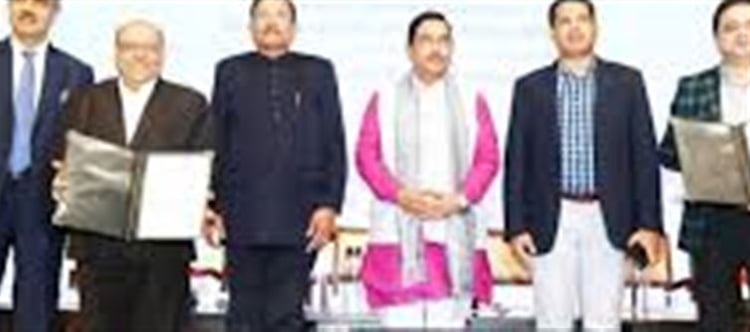

Toyota Kirloskar Motor (TKM) has signed a Memorandum of Understanding (MoU) with the National Institute of Solar Energy (NISE) — a premier research institution under the Ministry of New and Renewable Energy (MNRE) — to strengthen India’s efforts in clean energy and sustainable mobility. The MoU signing and exchange ceremony took place at the MNRE headquarters in New Delhi in the presence of Union minister Shri Pralhad Joshi, minister for New & Renewable Energy and Consumer Affairs, Food & Public Distribution.
What the MoU is About
Under this strategic collaboration:
- Toyota Kirloskar Motor has handed over a toyota Mirai hydrogen fuel cell electric vehicle to NISE.
- The vehicle will undergo extensive real-world testing in India over a defined period to gather data on how hydrogen fuel cell technology performs under indian driving conditions and climate.
The toyota Mirai is a second‑generation hydrogen fuel‑cell electric car that produces electricity through a chemical reaction between hydrogen and oxygen, emitting only water vapour — making it a zero‑emission vehicle. It offers a driving range of around 650 km and can be refuelled in less than five minutes, similar to conventional fuel vehicles.
Key Areas of Study Under This Partnership
NISE will use the Mirai for a comprehensive feasibility evaluation of hydrogen mobility in india, focusing on:
- Fuel efficiency and real‑world driving range
- Behaviour in urban and highway environments
- Performance across diverse terrain
- Refuelling patterns and infrastructure challenges
- Impact of dust, heat, humidity, and traffic conditions
- Adaptability to indian road and traffic conditions
- Long‑term reliability and environmental resilience
This will help policymakers, industry stakeholders, researchers, and technology developers better understand the practical considerations of deploying hydrogen fuel cell vehicles at scale in India.
Government and industry Perspectives
At the ceremony:
- Union minister Pralhad Joshi emphasised that the collaboration marks a significant step from planning to implementation in India’s clean‑energy transition and supports the government’s focus on energy independence, carbon neutrality, and low‑emission transportation.
- The initiative also aligns with India’s National Green Hydrogen Mission, which aims to establish a robust ecosystem for green hydrogen production and use — spanning energy, transportation, and industrial applications.
Minister of State Shripad Yesso Naik highlighted that real‑world trials like these are essential in moving from policy formulation to experimentation and eventual commercialisation of hydrogen‑based mobility solutions.
From TKM’s side, executives reiterated the company’s multi‑pathway approach to sustainable mobility — integrating hydrogen fuel cell vehicles alongside hybrid and battery electric technologies — as part of its commitment to help india meet energy security and carbon‑neutrality goals.
Why This Matters
This collaboration is significant because:
It is one of the first structured hydrogen‑mobility pilot projects in India, bringing together government, industry, and research expertise.
The data generated will help shape future decisions on hydrogen infrastructure, vehicle adoption strategies, and regulatory frameworks.
It enhances India’s capacity to evaluate hydrogen as a clean transportation fuel, supporting broader climate targets and energy independence ambitions.
Experts see hydrogen fuel cell vehicles as a complement to battery electric technologies, especially for long‑distance travel or sectors where fast refuelling and high range are critical.
Conclusion
The MoU between Toyota Kirloskar Motor and NISE represents a practical and forward‑looking step in India’s journey towards clean energy and zero‑emission transportation. By combining real‑world trials with government policy support under the National Green Hydrogen Mission, this partnership aims to accelerate the adoption of hydrogen technologies while enabling india to build domestic capabilities in cutting‑edge sustainable mobility solutions
Disclaimer:
The views and opinions expressed in this article are those of the author and do not necessarily reflect the official policy or position of any agency, organization, employer, or company. All information provided is for general informational purposes only. While every effort has been made to ensure accuracy, we make no representations or warranties of any kind, express or implied, about the completeness, reliability, or suitability of the information contained herein. Readers are advised to verify facts and seek professional advice where necessary. Any reliance placed on such information is strictly at the reader’s own risk.
 click and follow Indiaherald WhatsApp channel