


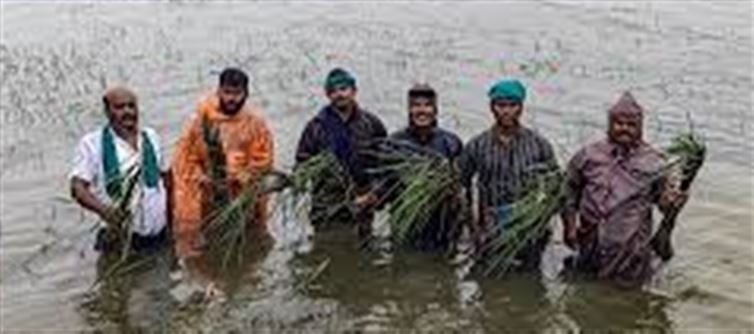

The tamil Nadu government has announced an allocation of ₹110 crore to provide relief to farmers whose crops were severely damaged by the recent Tidwa cyclone. The financial assistance aims to help affected farmers recover from the losses caused by the extreme weather event.
The Tidwa cyclone struck several districts of tamil Nadu, bringing heavy rainfall, strong winds, and localized flooding, which led to extensive damage to standing crops. Paddy fields, horticultural plantations, and other seasonal crops were affected, leaving many farmers facing significant financial challenges. Reports from district agricultural offices confirmed that thousands of hectares of farmland suffered partial or complete destruction.
In response, the state government has approved the release of ₹110 crore to provide timely financial support to the impacted farming community. The relief funds are expected to cover compensation for the destroyed crops and aid in restoring agricultural activities in the affected areas. Officials emphasized that the amount will be distributed transparently, ensuring that eligible farmers receive direct assistance in their bank accounts without delay.
The chief minister stated that the welfare of farmers is a priority for the government and that measures would continue to be implemented to mitigate the impact of natural disasters on agriculture. The government has also directed district officials to expedite crop damage assessments and monitor the distribution process closely to ensure swift delivery of aid.
Farmers and agricultural associations have welcomed the announcement, expressing relief and appreciation for the government’s proactive intervention. The allocation reflects the state’s commitment to supporting farmers in times of crisis, ensuring that agricultural livelihoods are protected against the increasing frequency of extreme weather events.
With the ₹110 crore relief package, the government aims to help tamil Nadu’s farmers regain stability and prepare for the upcoming sowing season, reinforcing resilience against future calamities.
Disclaimer:
The views and opinions expressed in this article are those of the author and do not necessarily reflect the official policy or position of any agency, organization, employer, or company. All information provided is for general informational purposes only. While every effort has been made to ensure accuracy, we make no representations or warranties of any kind, express or implied, about the completeness, reliability, or suitability of the information contained herein. Readers are advised to verify facts and seek professional advice where necessary. Any reliance placed on such information is strictly at the reader’s own risk.
 click and follow Indiaherald WhatsApp channel