
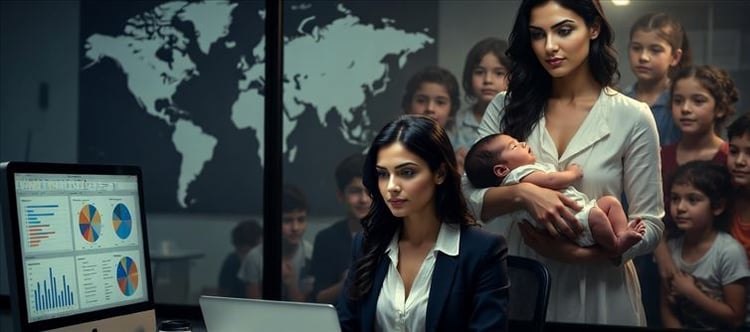


Modern society constantly tells women that empowerment looks a certain way: climb the corporate ladder, attend meetings, build presentations, answer emails, lead teams, and chase professional success. From movies to advertisements to social media campaigns, the message is repeated everywhere — independence equals career achievement. But a growing number of people are beginning to question whether society has quietly started undervaluing another form of power that is far more fundamental: the ability to create and raise the next generation of human life.
The argument is provocative and controversial. Civilization can survive if millions of office jobs disappear tomorrow. Meetings can be automated. Reports can be outsourced. Presentations can be generated by software. But if women collectively stopped having children, society itself would face collapse within a generation. Economies, governments, labor systems, and entire nations ultimately depend on population continuity.
That reality has led some critics to argue that motherhood and family-building — once seen as central pillars of society — are now often treated as secondary, outdated, or even less prestigious compared to corporate success. In many urban cultures today, raising children is increasingly framed as a “sacrifice,” while endless workplace productivity is celebrated as empowerment.
The deeper concern behind this debate is not that women should avoid careers or ambition. It’s the feeling that modern culture sometimes reduces female worth to economic output while ignoring the unique biological and social roles women play in sustaining civilization itself.
Critics argue that true empowerment should mean freedom of choice — whether a woman wants to build a company, raise a family, do both, or choose an entirely different path. The real issue, they say, begins when society only praises one model of success while subtly dismissing every other role as lesser.
That is why this conversation has become so emotionally charged: it touches power, identity, family, gender roles, and the future of society itself.
 click and follow Indiaherald WhatsApp channel