


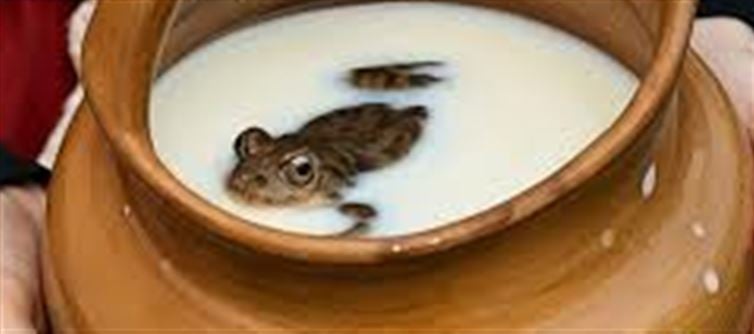

Throughout history, people have used various methods to preserve food, especially before the advent of modern refrigeration. One of the strangest and most bizarre practices in food preservation involved placing frogs in milk. While it may seem odd today, this technique actually had some scientific basis and was believed to help extend the shelf life of milk.
Let’s take a closer look at why people used frogs in milk and the science behind this curious practice.
1. The Practice of Using Frogs in Milk: A Historical Perspective
In the past, especially before refrigeration and other preservation methods, fresh milk had a very short shelf life. It would quickly sour due to the growth of bacteria. people sought various ways to slow this process, and one method that gained some traction was placing live frogs into a container of milk.
This method was particularly noted in the 19th and early 20th centuries in certain parts of Europe and Asia. Though the practice sounds strange today, it was based on folk knowledge that connected the biology of frogs to the preservation of milk.
2. The Role of Frogs in Milk Preservation
The idea behind this practice lay in the biological and environmental factors that made frogs beneficial for milk preservation:
2.1. Frogs' Secretions May Have Antibacterial Properties
Frogs, especially certain species, secrete a sticky, mucous-like substance from their skin. In many amphibians, this secretion is thought to have antibacterial properties, helping to protect them from pathogens in their environment, such as bacteria and fungi.
Scientific Link: Some studies suggest that frog secretions can contain antimicrobial peptides. These peptides have the ability to kill or inhibit the growth of harmful bacteria, which could have slowed the spoilage of milk by reducing bacterial growth.
Impact on Milk: By placing a frog in the milk, it is believed that the frog’s natural secretions might have prevented harmful bacteria from spoiling the milk. The belief was that the frog acted as a natural “bio-preservative”, keeping the milk fresher for longer.
2.2. Frogs Were Readily Available and Cheap
In the past, especially in rural areas, frogs were readily available, especially near water bodies. They didn’t require much in terms of care and were considered an easy solution for people in agricultural societies looking for inexpensive ways to preserve their food.
Frogs were much easier to find than other preservation tools such as salt, sugar, or preservatives, making them a cost-effective option for many.
3. Frogs in Milk: More Than Just a Superstition?
While it may sound like an old wives' tale or a superstition, there’s more to this practice than meets the eye. The use of frogs in milk wasn’t just a random, unscientific ritual—it may have had some grounding in practical, empirical knowledge.
In the absence of modern scientific understanding, people often relied on folk science and trial-and-error methods to solve everyday problems. This practice might have been passed down through generations as a form of traditional knowledge, which, while unconventional, served a practical purpose.
4. The Science Behind Milk Spoilage
To understand why this practice might have worked, it’s helpful to know how milk spoils:
Bacterial Growth: The primary reason for milk spoilage is the growth of bacteria such as Lactobacillus, which turns milk into yogurt, or Bacillus cereus, which causes milk to sour and develop an unpleasant smell. These bacteria thrive in warm conditions, and milk, being a perishable liquid, provides a perfect environment for bacterial growth.
Lactic Acid: As the bacteria multiply, they produce lactic acid, which causes the milk to acidify and eventually curdle. This process results in the sour, off-flavor commonly associated with spoiled milk.
By introducing a natural antibacterial agent (in the form of frog secretions), it’s possible that this practice helped reduce bacterial proliferation and kept milk fresh for a longer period of time.
5. Frog-Based Preservation: Other Uses in Ancient Traditions
While the use of frogs in milk may seem peculiar, frogs have been used in various cultures for their medicinal and preservative qualities. For example:
In some traditional Chinese medicine, frog skins and frog legs were believed to have therapeutic properties, and were used in different potions and remedies.
Frog mucus has also been explored for its antimicrobial properties in modern research, with scientists looking into its potential applications in biotechnology and medicine.
These age-old practices likely had their roots in observations of natural processes, as people witnessed the protective properties of frogs in the wild and sought to replicate those effects in everyday life.
6. Declining Practice: The End of Frogs in Milk
As refrigeration technology improved in the 20th century, the practice of placing frogs in milk gradually fell out of favor. Refrigeration provided a more reliable and consistent method of keeping milk fresh, and the need for biological preservation methods diminished. Additionally, modern-day food safety regulations and standards have phased out the need for such unusual practices.
Milk Preservation Today: Today, we have pasteurization, where milk is heated to kill harmful bacteria, cold storage for keeping milk fresh, and chemical preservatives to extend shelf life. All of these methods have made the use of frogs in milk obsolete.
7. Conclusion: A Fascinating Blend of tradition and Science
The practice of placing frogs in milk may seem absurd today, but it highlights the resourcefulness of people in pre-refrigeration times and their reliance on natural elements to solve practical problems. While modern science may not support the practice as an effective preservation method anymore, it opens a window into the intersection of folk knowledge, biology, and cultural practices.
Though frogs are no longer found in milk bottles, the strange science behind this method remains an intriguing chapter in the history of food preservation—a testament to humanity’s early understanding of nature’s potential to assist in the fight against spoilage.
Disclaimer:
The views and opinions expressed in this article are those of the author and do not necessarily reflect the official policy or position of any agency, organization, employer, or company. All information provided is for general informational purposes only. While every effort has been made to ensure accuracy, we make no representations or warranties of any kind, express or implied, about the completeness, reliability, or suitability of the information contained herein. Readers are advised to verify facts and seek professional advice where necessary. Any reliance placed on such information is strictly at the reader’s own risk.
 click and follow Indiaherald WhatsApp channel